


Wearables for Hazardous Areas: 4 Advanced Ways to Improve Safety & Prevent Risks
Wearables for hazardous areas are body-worn devices — watches, glasses, helmet cameras and gas-detection badges — certified so they cannot ignite an explosive atmosphere. They do two things a handheld cannot: monitor the worker continuously, and raise an alarm automatically when something goes wrong. Typical functions are man-down and lone-worker detection, real-time location, gas exposure monitoring and hands-free communication with a control room. The certification matters as much as the feature list — a wearable without a marking for the zone it enters is simply not permitted there.
Wearables for Hazardous Areas improve industrial safety by enabling real-time monitoring, reducing risks, and supporting safer operations in extreme environments.
What Are Wearables for Hazardous Areas?
Industrial environments such as oil refineries, chemical plants, and mining sites are inherently dangerous due to the presence of flammable gases, vapors, and combustible dust. In such high-risk zones, safety and real-time monitoring are top priorities. This is where wearables for hazardous areas are transforming how workers operate and communicate.
These explosion-proof and ATEX-certified wearable devices not only improve worker safety but also enhance efficiency, data collection, and operational control. From smart helmets to intrinsically safe smartwatches, wearable technology is bridging the gap between safety compliance and industrial innovation.
What Are Wearables for Hazardous Areas?
Wearables for hazardous areas are specially designed electronic devices that can be worn on the body, ensuring continuous monitoring, communication, and safety in explosive or flammable environments.
Unlike regular gadgets, these devices are ATEX, or UL certified, meaning they are built to operate safely in zones where an explosion could occur due to sparks or heat.
Common Types of Wearables For Hazardous Areas
-
Smart Helmets – Equipped with sensors, cameras, and communication tools for real-time monitoring.
-
Smart Glasses / AR Goggles – Provide remote assistance, digital overlays, and live video for remote inspections.
-
Smartwatches – Offer health tracking, SOS alerts, and hands-free notifications.
-
Body Cameras – Intrinsically safe cameras for incident recording and real-time visibility.
-
Smart Vests / Sensors – Track body temperature, motion, and gas exposure levels.
Why Do Hazardous Sites Need Wearables at All?
1. Real-Time Worker Safety Monitoring
Wearables can monitor vital signs such as heart rate, oxygen levels, and temperature. In extreme environments, any abnormality triggers automatic alerts to supervisors or safety control rooms.
2. Immediate Emergency Alerts
In case of an accident, explosion risk, or worker fall, the device can automatically send SOS alerts with real-time GPS coordinates, enabling quick emergency response.
3. Enhanced Communication
Explosion-proof smartwatches and headsets ensure hands-free communication in noisy and restricted environments where mobile phone use is limited.
4. Regulatory Compliance
Using ATEX-certified wearables ensures compliance with global safety standards, minimizing legal risks and improving company reputation in safety audits.
5. Improved Productivity
By providing remote connectivity and digital access to work instructions, wearables reduce downtime and eliminate the need for paper-based procedures.

Which Certifications Must a Hazardous-Area Wearable Have?
A wearable taken into a classified area must carry a marking valid for that zone — ATEX in the European Union, IECEx internationally, or a Class and Division approval in North America. The marking has to cover the gas group and temperature class of the atmosphere it will enter, not merely state that the device is intrinsically safe.
To ensure safety, these devices must comply with strict international certifications:
| Standard | Region | Purpose |
|---|---|---|
| ATEX | Europe | Ensures equipment safety in explosive atmospheres |
| ATEX | Global | Certifies electrical equipment for explosive environments |
| UL/CSA | North America | Confirms product safety against fire and explosion hazards |
Every wearable for hazardous areas must clearly state its Zone or Division rating:
-
Zone 0 / 20 – Continuous presence of explosive atmosphere
-
Zone 1 / 21 – Likely presence during normal operations
-
Zone 2 / 22 – Rare or short-term presence
What Types of Hazardous-Area Wearables Are Available?
The main categories are certified smartwatches for alerts and location, intrinsically safe smart glasses for hands-free instruction and remote assistance, explosion-proof helmet cameras for inspection and evidence, and wearable gas detectors that log exposure continuously.
1. ATEX-Certified Smartwatch
-
Monitors health metrics, worker movement, and exposure data.
-
Includes SOS functionality for emergencies.
-
Explosion-proof and water-resistant design suitable for offshore platforms.
2. Intrinsically Safe Smart Glasses
-
Allow technicians to view live schematics while working.
-
Support real-time video calls with remote experts for troubleshooting.
-
Reduce downtime by 25–40% in maintenance operations.
3. Explosion-Proof Helmet Cameras
-
Enable remote visual inspection in restricted zones.
-
Store high-definition footage for incident documentation.
-
Compliant with ATEX standards.
4. Smart Gas Detection Wearables
-
Continuously detect volatile organic compounds (VOCs), methane, and carbon monoxide.
-
Provide immediate alerts via vibration or LED signals.
5. Connected Worker Platforms
-
Integrate wearable data into cloud-based dashboards.
-
Managers can track worker safety, fatigue, and performance metrics in real time.
Industries Using Wearables for Hazardous Areas
| Industry | Use Case |
|---|---|
| Oil & Gas | Worker tracking, gas detection, and safety alerts. |
| Mining | Real-time monitoring of underground workers. |
| Chemical Plants | Detecting toxic gas leaks and temperature variations. |
| Pharmaceutical | Ensuring contamination control and process safety. |
| Energy & Utilities | Field maintenance and compliance tracking. |
Benefits of Wearables in Explosion-Proof Environments
1. Enhanced Worker Safety
Wearables detect unsafe conditions early and alert both the worker and the control team — reducing the chance of fatal accidents.
2. Reduced Equipment Downtime
With predictive maintenance alerts and environmental sensors, companies can act before a failure occurs.
3. Data-Driven Insights
Every wearable generates valuable safety data that can be analyzed for future risk prevention and performance optimization.
4. Remote Supervision
Supervisors can monitor workers remotely, reducing the need for physical inspections in hazardous areas.
5. Hands-Free Operations
Workers can receive task instructions, communicate, and share data without using handheld devices, keeping both hands free for the job.
Challenges and Limitations
Despite their advantages, wearables for hazardous areas face a few technical and operational challenges:
-
Battery Limitations – Explosion-proof casings restrict battery capacity and charging options.
-
Cost Factor – Certified devices are significantly more expensive than consumer wearables.
-
Connectivity Issues – Thick walls or underground environments can affect real-time data transmission.
-
User Comfort – Workers may initially find wearable gear uncomfortable during long shifts.
Future of Wearables in Hazardous Workplaces
The next generation of industrial wearables will focus on:
-
AI-powered risk prediction using worker and environmental data.
-
Edge computing for faster, offline data processing.
-
5G-enabled wearable communication systems.
-
Integration with digital twins and industrial IoT (IIoT) systems.
As technology advances, wearables will move beyond safety tools — becoming intelligent co-workers that anticipate risks and optimize productivity.
Conclusion
The rise of wearables for hazardous areas represents a major leap forward in industrial safety and digital transformation. These devices not only safeguard workers in explosive environments but also provide actionable data that can prevent incidents and improve operations.
As industries embrace ATEX-certified wearable technologies, the future of industrial safety looks smarter, safer, and more connected than ever.
Frequently Asked Questions (FAQs)
1. What are wearables for hazardous areas?
They are ATEX-certified devices designed for use in explosive or high-risk industrial environments.
2. Why do wearables need ATEX certification?
Because ATEX ensures the device won’t ignite gases or dust, making it safe in explosive atmospheres.
3. Are wearable devices intrinsically safe?
Yes, most wearables for hazardous zones are designed to be intrinsically safe, preventing sparks or heat ignition.
4. What types of wearables are used in oil & gas industries?
Smartwatches, helmets, gas detectors, and AR glasses are commonly used.
5. How do smart helmets help workers?
They offer communication tools, sensors, and cameras for real-time safety monitoring.
6. Do wearables improve productivity?
Yes, they allow workers to operate more efficiently through remote assistance and live data access.
7. Are wearable devices waterproof and shockproof?
Certified explosion-proof wearables are rugged, water-resistant, and designed for industrial use.
8. What is Wearables for Hazardous Areas devices?
In many cases, yes — they offer hands-free operation in restricted zones.
9. How are wearables powered in hazardous zones?
They use sealed, intrinsically safe batteries that prevent overheating or sparks.
10. Do these devices track worker location?
Yes, GPS-enabled wearables can track real-time worker locations for safety management.
11. Can data from wearables be integrated into company systems?
Yes, many wearables connect to IoT and ERP systems for centralized monitoring.
12. What is the average cost of ATEX-certified wearables?
Depending on functionality, prices range from $500 to $3,000 per device.
13. How long do wearable batteries last?
Typically 8–24 hours, depending on usage and connectivity.
14. Are there privacy concerns with wearable monitoring?
Yes, but companies can use anonymized data to ensure worker privacy.
15. What is the future of wearables in industrial safety?
Integration with AI, IoT, and predictive analytics to create fully connected, intelligent safety systems.
Related ATEX Products & Resources
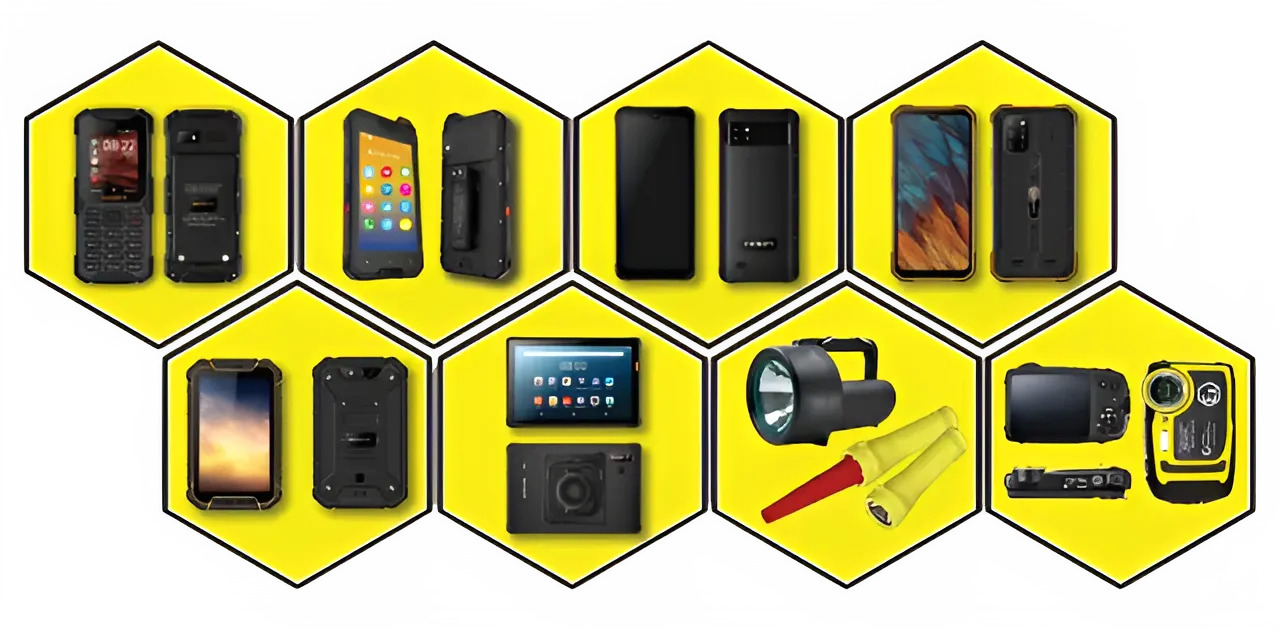
Explore our range of ATEX-certified devices for hazardous areas:
Frequently Asked Questions
Can I take an ordinary smartwatch into a hazardous area?
No. A consumer smartwatch is not certified, and its battery and radio can release enough energy to ignite an explosive atmosphere. Only a device carrying a valid ATEX, IECEx or Class and Division marking for that zone may be taken in.
What is a man-down alarm?
It is a function that detects when a worker has stopped moving or has fallen and raises an alert automatically if they do not cancel it. It is the main reason wearables are specified for lone-worker and confined-space tasks.
Do hazardous-area wearables replace gas detectors?
Not usually. Some wearables include gas sensing, but a wearable is normally used alongside a certified portable gas detector rather than instead of one, and site rules generally specify the detector separately.