


ATEX Device Interface Customization: 6 Essential Steps Toward Safer Industrial Operations
ATEX Device Interface Customization ensures safer industrial operations by improving usability, compliance, and hazard control. Discover key strategies to enhance safety and efficiency.
Introduction
ATEX Device Interface Customization industrial field operations ko zyada safe aur user-friendly banata hai, khaaskar oil & gas, mining, aur energy jaise hazardous environments mein. Field technicians aksar complex digital devices use karte hain, jo ATEX-regulated zones mein safety risks create kar sakte hain.
Simple, intuitive, aur compliant interface design ke zariye, ATEX Device Interface Customization usability ko improve karta hai, errors ko kam karta hai, aur explosive atmospheres mein bhi safer operations ensure karta hai.
Understanding ATEX Device Interface Customization
ATEX device interface customization refers to the process of designing and optimizing digital device interfaces—such as screens, buttons, and menus—so that they are safe, compliant, and easy to use in explosive environments defined by the ATEX directive (ATmosphères EXplosibles).
In industries like oil refineries, chemical plants, and offshore rigs, devices are required to meet strict ATEX certification standards to prevent ignition risks. But compliance alone isn’t enough—usability matters too.
A customized interface ensures that non-technical workers can perform their tasks efficiently without compromising safety.
The Need for User-Friendly Interfaces in Hazardous Industries
Field workers often face extreme conditions:
-
Limited visibility
-
Glove operation
-
High noise and vibration
-
Harsh outdoor environments
For them, complicated systems are not just frustrating—they’re dangerous. A confusing interface could lead to delays, errors, or even safety incidents.
ATEX device interface customization solves these problems by focusing on simplicity, visibility, and usability, allowing workers to operate critical equipment confidently—even under pressure.
Challenges Faced by Non-Technical Field Workers
Most field personnel are not software engineers or system designers. They rely on intuitive tools that help them complete operational or maintenance tasks safely. Common challenges include:
-
Minimal Training
Workers must understand device interfaces quickly, often with little or no technical background. -
Environmental Limitations
Devices are used with gloves, in poor lighting, and amidst constant vibration and noise. -
Hazardous Settings
In ATEX-certified areas, safety is the top priority—devices must function reliably under explosive conditions without causing distraction. -
Task-Focused Operations
Workers need tools that allow fast action—not complex menus or deep navigation trees.
By addressing these challenges, ATEX device interface customization enhances both productivity and safety.
Core Principles of Effective Interface Customization
To make interfaces usable and efficient in hazardous field environments, designers follow several industrial-specific principles:
1. Simplicity Over Complexity
Keep the interface clean, minimal, and functional.
Remove unnecessary options and emphasize the core features that matter most.
Use large buttons, clear icons, and legible typography for quick recognition.
2. Visual Hierarchy and Clarity
Important information—like temperature warnings, gas pressure indicators, or emergency alerts—should stand out visually.
Color coding (e.g., red for danger, green for normal) and icons help users make split-second decisions.
3. Compliance with ATEX Standards
Device interfaces must be designed with explosion safety in mind.
This includes physical constraints like button size, tactile feedback, and touch sensitivity even when encased in protective housings.
4. Robustness and Accessibility
Interfaces should perform reliably despite dust, humidity, or vibration.
Accessibility features like voice commands and glove touch modes improve usability in the field.
Designing for Safety and Compliance
In ATEX-regulated environments, safety design is inseparable from usability.
Devices must not only prevent sparks and overheating but also avoid operational errors caused by poor interface design.
For example:
-
A cluttered interface can distract the worker, leading to critical mistakes.
-
A slow or unclear response can delay emergency actions.
Therefore, ATEX device interface customization integrates safety confirmations, visual feedback, and logical workflows to minimize human error.
Integration of AI and Automation in Interface Design
Modern ATEX-compliant devices increasingly use AI and automation to simplify decision-making.

Examples include:
-
Predictive maintenance alerts, where AI detects performance anomalies and informs users before failures occur.
-
Voice-assisted controls, enabling hands-free operation when manual interaction isn’t possible.
-
Automated safety prompts, guiding users through procedures step-by-step.
AI-driven ATEX device interface customization helps make technology smarter and safer—reducing training needs and operational risks.
Training and Continuous Adaptation
Even the most intuitive interface requires some level of user training.
Companies must invest in visual, scenario-based training modules tailored to their work environments—such as simulated oil refinery or mining operations.
Regular feedback loops are also vital.
As interfaces evolve, continuous feedback from field workers ensures that customization aligns with real-world user behavior, not just theoretical design.
This iterative approach keeps the ATEX device interface customization effective, practical, and future-ready.
Benefits of ATEX Device Interface Customization
Properly customized interfaces provide measurable improvements:
-
Enhanced Productivity
Workers complete tasks faster with minimal navigation. -
Reduced Human Error
Clear layouts and confirmations reduce operational mistakes. -
Increased Safety
Well-designed interfaces allow faster response to alarms and prevent unsafe actions. -
Regulatory Compliance
Ensures devices fully meet ATEX safety requirements. -
Higher Job Satisfaction
Workers feel more confident, less stressed, and more efficient with easy-to-use tools. -
Cost Efficiency
Fewer incidents and training requirements lead to long-term operational savings.
In essence, ATEX device interface customization empowers companies to operate more safely and efficiently in hazardous industries.
Conclusion
In complex and high-risk industrial environments, ATEX device interface customization is no longer optional—it’s a necessity.
It bridges the gap between technology and human usability, ensuring that even non-technical workers can perform their duties safely and confidently.
By prioritizing simplicity, safety, and adaptability, organizations can enhance productivity, prevent accidents, and strengthen compliance with ATEX regulations.
Ultimately, customized ATEX device interfaces transform industrial safety from a challenge into a competitive advantage.
FAQs – ATEX Device Interface Customization
Q1. What does ATEX device interface customization mean?
It refers to designing digital device interfaces that are compliant with ATEX explosion safety standards while being user-friendly for field workers.
Q2. Why is interface customization important for ATEX certified devices?
Because non-technical workers operate them in hazardous zones, and clear, simple interfaces reduce human error and enhance safety.
Q3. What industries require ATEX device interface customization?
Primarily oil and gas, mining, petrochemical, and energy sectors where explosive atmospheres exist.
Q4. How does customization improve productivity?
Simplified layouts and smart navigation help workers focus on their tasks, minimizing wasted time and confusion.
Q5. What safety features are integrated into ATEX device interfaces?
Color-coded alerts, confirmation prompts, tactile buttons, and AI-assisted guidance to prevent unsafe operations.
Q6. Can AI be integrated into ATEX device interfaces?
Yes, AI helps in predictive maintenance, automated alerts, and voice control—improving both efficiency and safety.
Q7. How does customization reduce training time?
Because intuitive interfaces are self-explanatory, workers can learn through short, visual-based training sessions.
Q8. What role does visual hierarchy play in interface design?
It ensures critical information like alarms or readings stands out, allowing faster decision-making.
Q9. Are there any ATEX standards specific to interface design?
While ATEX focuses on explosion protection, interfaces must complement safety principles without introducing operational risks.
Q10. How often should interfaces be updated?
Regular updates are recommended to incorporate user feedback and adapt to new operational requirements.
Industrial Applications & Real-World Use Cases
In hazardous industrial environments such as oil refineries, petrochemical plants, offshore platforms, and mining operations, reliable communication is a critical safety requirement. Workers in Zone 1 and Zone 21 classified areas face constant exposure to flammable gases, vapors, and combustible dust. Any electronic device used must be intrinsically safe to prevent ignition.
Oil & Gas Operations
Field engineers on drilling rigs, well pads, and production platforms rely on ATEX certified devices for work order management, real-time communication with control rooms, digital permit-to-work systems, and photographic documentation. Our devices are deployed across ADNOC, Saudi Aramco, KOC, KNPC, ONGC, Petrobras, and Shell facilities worldwide.
Refinery & Petrochemical Safety
Process safety management requires continuous communication between operators, maintenance technicians, and HSE personnel. ATEX phones enable instant push-to-talk during turnarounds, emergency responses, and inspection rounds. Explosion-proof tablets allow viewing P&IDs and digital checklists in the field.
Offshore Platform Operations
Offshore environments present salt spray corrosion, extreme weather, and limited charging infrastructure. Our IP68-rated devices withstand these conditions while maintaining Zone 1 certification for crane coordination, emergency mustering, and helicopter manifesting.
Safety Compliance Standards
- ATEX Directive 2014/34/EU — European explosive atmospheres standard
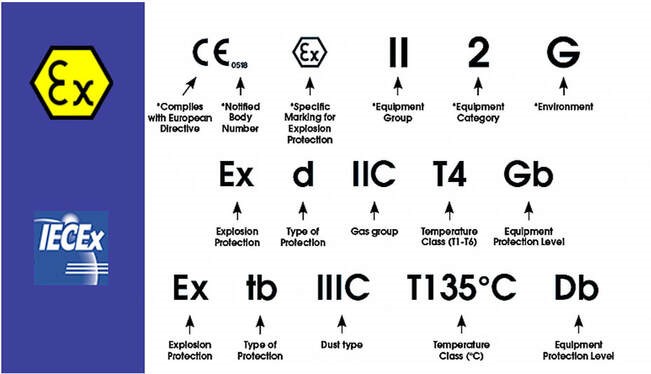
- Ex ia IIC T4 Gb — Zone 1 intrinsic safety for gas groups
- Ex ia IIIC T135°C Db — Zone 21 dust protection
- IP68 — Dust and water protection
- MIL-STD-810H — Military-grade durability
Browse Products → | Request Quote → | Certifications →
Related ATEX Products & Resources
Explore our range of ATEX-certified devices for hazardous areas: