


ATEX Devices in Adhesive Factories: 5 Critical Safety Rules & Risks
ATEX Devices in Adhesive Factories ensure safer production by meeting strict safety standards, reducing explosion risks, and supporting compliant industrial operations.
Introduction
Adhesive factories are vital in industries ranging from packaging and construction to automotive and electronics. They manufacture different types of glues, sealants, and bonding agents that are used globally. However, adhesive production involves hazardous chemicals, flammable solvents, and volatile organic compounds (VOCs) that can create explosive atmospheres.
To prevent accidents, meet regulations, and protect workers, manufacturers rely on ATEX devices in adhesive factories. These explosion-proof devices ensure safe operations in hazardous zones while enabling efficient monitoring, communication, and compliance.
What Are Adhesive Factories?
Adhesive factories produce bonding agents like:
-
Solvent-based adhesives – widely used in packaging, woodworking, and laminates.
-
Hot-melt adhesives – used in automotive, construction, and furniture.
-
Water-based adhesives – applied in paper, textiles, and packaging.
-
Epoxy and polyurethane adhesives – used in aerospace and electronics.
Since many of these products involve volatile and flammable chemicals, the use of ATEX devices in adhesive factories is mandatory for safety and compliance.
Hazards in Adhesive Factories
Adhesive production is associated with several risks:
-
Explosion Risks – Solvents such as acetone, ethanol, and toluene are highly flammable.
-
Toxic Vapors – VOCs can harm workers’ health.
-
Dust Explosions – Certain adhesive powders can ignite when airborne.
-
Static Discharge – Sparks may cause ignition in solvent-rich environments.
-
Fire Hazards – Heat processes and open flames increase risks.
Because of these risks, ATEX devices in adhesive factories are critical for reducing hazards.

What Are ATEX Devices?
ATEX (Atmosphères Explosibles) devices are explosion-proof equipment certified under the ATEX Directive (2014/34/EU) and ATEX standards for use in hazardous environments.
Examples of ATEX devices in adhesive factories include:
-
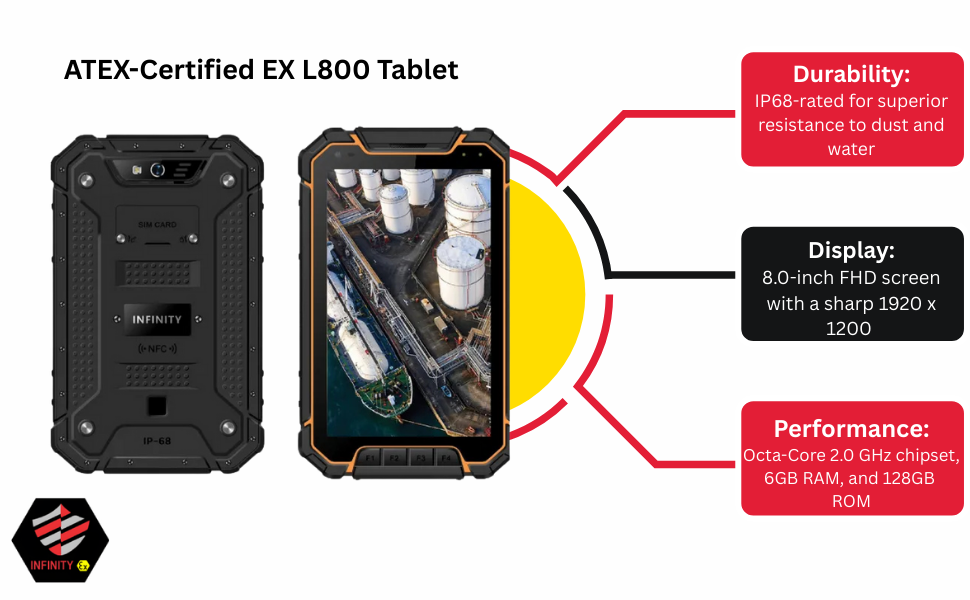
Intrinsically safe smartphones and tablets
-
Explosion-proof radios and intercoms
-
Gas detectors for VOC monitoring
-
ATEX-certified lighting systems
-
Rugged handheld computers for inspection and reporting
These devices prevent sparks, overheating, and electrical discharge in high-risk zones.
Importance of ATEX Devices in Adhesive Factories
The role of ATEX devices in adhesive factories is significant for:
-
Worker Safety – Prevent explosions and toxic exposure.
-
Regulatory Compliance – Meet ATEX safety requirements.
-
Operational Efficiency – Enable real-time communication and inspections.
-
Reduced Downtime – Prevent accidents that cause shutdowns.
-
Cost Savings – Minimize accident-related financial losses.
Global Standards & Compliance
-
ATEX Directive (2014/34/EU): Mandatory in the EU.
-
ATEX certification: International standard for explosion-proof devices.
-
OSHA & NFPA Standards: Additional safety compliance in the U.S.
Adhesive manufacturers must ensure only certified ATEX devices in adhesive factories are used in hazardous zones.
Benefits of Using ATEX Devices in Adhesive Factories
-
Explosion Prevention – No sparks or ignition sources.
-
Efficient Monitoring – Gas detectors provide early warnings.
-
Improved Productivity – Tablets and handhelds streamline inspections.
-
Worker Confidence – Safer environment leads to better performance.
- Digital Integration – ATEX devices connect to IoT and cloud platforms.
Future Trends of ATEX Devices in Adhesive Factories
-
IoT-enabled ATEX devices for predictive maintenance.
-
Wearable ATEX equipment such as helmets and smart glasses.
-
Drones with ATEX certification for remote inspections.
-
AI-driven monitoring systems for VOC and gas detection.
Conclusion
Adhesive factories operate with hazardous chemicals that can lead to fires, explosions, and health risks. To counter these challenges, ATEX devices in adhesive factories are indispensable. From intrinsically safe phones and tablets to explosion-proof lighting and gas detectors, these devices ensure safety, compliance, and efficiency.
As safety regulations evolve and digital transformation accelerates, the demand for ATEX devices will continue to grow, making them a cornerstone of safe adhesive production worldwide.
15 FAQs About ATEX Devices in Adhesive Factories
Q1. What are ATEX devices in adhesive factories?
They are explosion-proof devices used in hazardous zones.
Q2. Why are ATEX devices necessary in adhesive manufacturing?
They prevent explosions caused by flammable solvents.
Q3. What are examples of ATEX devices?
Phones, radios, tablets, lighting systems, and gas detectors.
Q4. What standards regulate ATEX devices?
ATEX Directive (EU) and ATEX (international).
Q5. Can normal devices be used in adhesive factories?
No, only ATEX-certified devices are safe in hazardous zones.
Q6. How do ATEX devices improve safety?
They eliminate ignition risks such as sparks and static discharge.
Q7. Do ATEX devices also help with efficiency?
Yes, by enabling digital inspections and real-time communication.
Q8. Are ATEX devices legally required?
Yes, in hazardous industries including adhesive manufacturing.
Q9. How do gas detectors help in adhesive factories?
They monitor VOCs and provide early warnings.
Q10. Are ATEX devices durable?
Yes, they are rugged, waterproof, and impact-resistant.
Q11. Can ATEX devices connect to digital platforms?
Yes, they support IoT and cloud integration.
Q12. Do ATEX devices reduce operational downtime?
Yes, by preventing accidents and ensuring safety.
Q13. Where else are ATEX devices used?
In petrochemicals, mining, oil & gas, and refineries.
Q14. What is the future of ATEX devices in adhesive factories?
IoT-enabled monitoring and smart wearable safety gear.
Q15. Why should adhesive manufacturers invest in ATEX devices?
To protect workers, comply with laws, and improve productivity.
Industrial Applications & Real-World Use Cases
In hazardous industrial environments such as oil refineries, petrochemical plants, offshore platforms, and mining operations, reliable communication is a critical safety requirement. Workers in Zone 1 and Zone 21 classified areas face constant exposure to flammable gases, vapors, and combustible dust. Any electronic device used must be intrinsically safe to prevent ignition.
Oil & Gas Operations
Field engineers on drilling rigs, well pads, and production platforms rely on ATEX certified devices for work order management, real-time communication with control rooms, digital permit-to-work systems, and photographic documentation. Our devices are deployed across ADNOC, Saudi Aramco, KOC, KNPC, ONGC, Petrobras, and Shell facilities worldwide.
Refinery & Petrochemical Safety
Process safety management requires continuous communication between operators, maintenance technicians, and HSE personnel. ATEX phones enable instant push-to-talk during turnarounds, emergency responses, and inspection rounds. Explosion-proof tablets allow viewing P&IDs and digital checklists in the field.
Offshore Platform Operations
Offshore environments present salt spray corrosion, extreme weather, and limited charging infrastructure. Our IP68-rated devices withstand these conditions while maintaining Zone 1 certification for crane coordination, emergency mustering, and helicopter manifesting.
Safety Compliance Standards
- ATEX Directive 2014/34/EU — European explosive atmospheres standard
- Ex ia IIC T4 Gb — Zone 1 intrinsic safety for gas groups
- Ex ia IIIC T135°C Db — Zone 21 dust protection
- IP68 — Dust and water protection
- MIL-STD-810H — Military-grade durability
Browse Products → | Request Quote → | Certifications →
Related ATEX Products & Resources
Explore our range of ATEX-certified devices for hazardous areas:
Selecting the Right Device for Your Operation
Choosing the correct explosion-proof device depends on your specific operational requirements, environmental conditions, and workflow needs. Here are the key factors to consider when evaluating intrinsically safe communication equipment for your facility:
For Field Operators and Technicians
Personnel performing daily rounds, equipment inspections, and maintenance tasks benefit from compact phones with long battery life and rugged construction. The EX72 Plus delivers excellent balance between size, durability, and Zone 1 certified functionality for hands-on field work.
For Engineers and Supervisors
Professionals who need to reference drawings, access CMMS systems, review data trends, and manage digital permits require larger displays and more processing power. The EX 101 Ultra and INFINITY EX 100 PRO provide the performance needed for these demanding tasks while maintaining full ATEX certification.
For Tablet-Based Workflows
Operations transitioning to digital permit-to-work, electronic logbooks, or tablet-based inspection systems need larger screen formats. The TL110 5G Tablet provides a desktop-class experience in a Zone 1 rated package, ideal for control room extensions, field engineering, and supervisor walkdowns.
Key Selection Criteria
- Zone classification of your operating environment (Zone 1 gas and/or Zone 21 dust)
- Temperature range at your facility (our devices operate from minus 20 to plus 60 degrees Celsius)
- Battery duration needed for your shift length (8, 12, or 16 hour shifts)
- Application requirements such as SAP, push-to-talk, camera quality, or GPS accuracy
- Network compatibility with your facility communications infrastructure
Contact our team for a personalized device recommendation based on your specific operational requirements.