


ATEX Devices in Gas-Fired Power Plants: 5 Critical Factors for Safe & Reliable Operations
ATEX devices in gas-fired power plants help improve operational safety, prevent explosion risks, and ensure compliance in high-hazard industrial environments.
Introduction
Gas-fired power plants are one of the most widely used sources of electricity production worldwide. They are efficient, relatively low-cost, and produce less carbon dioxide compared to coal-fired plants. However, they also operate in high-risk environments due to the presence of natural gas, combustible vapors, and hot surfaces. These conditions create potentially explosive atmospheres where even a minor spark can result in a catastrophic event.
To minimize these risks, industries rely on ATEX devices in gas-fired power plants. These explosion-proof systems are designed and certified under the ATEX Directive (2014/34/EU) to prevent ignition sources, protect workers, and maintain operational safety.
In this article, we will explore why ATEX devices are essential in gas-fired plants, the types of equipment used, their benefits, compliance requirements, and future trends.
Why Gas-Fired Power Plants Are High-Risk Environments
Gas-fired plants involve multiple processes that carry explosion hazards:
-
Natural Gas Storage and Transmission – Gas leaks can lead to highly flammable conditions.
-
Combustion Chambers – Extremely high temperatures increase ignition risks.
-
Turbine Operations – Hot surfaces and friction can act as ignition sources.
-
Electrical Equipment – Sparks from motors, switches, or lighting can ignite gas vapors.
-
Maintenance Activities – Improper handling of tools or equipment increases the chances of accidents.
Due to these risks, the use of ATEX devices in gas-fired power plants is not optional—it is a mandatory safety measure.
What Are ATEX Devices?
ATEX devices are specially engineered equipment designed to operate safely in potentially explosive atmospheres. The term ATEX comes from the French “ATmosphères EXplosibles” and refers to two EU directives:
-
ATEX Directive 2014/34/EU – Governs equipment and protective systems for explosive atmospheres.
-
ATEX Directive 1999/92/EC – Defines minimum safety requirements for workers in hazardous zones.
By using ATEX devices in gas-fired power plants, companies ensure that electrical and mechanical equipment does not act as an ignition source.
Types of ATEX Devices in Gas-Fired Power Plants
1. Explosion-Proof Motors and Drives
-
Essential for turbines, pumps, and compressors.
-
Prevent overheating and sparking during high-load operations.
2. ATEX Lighting Systems
-
Provide safe illumination in hazardous zones.
-
Flameproof housings prevent ignition of flammable gases.
3. Gas Detection and Monitoring Sensors
-
Continuously monitor for leaks or abnormal gas concentrations.
-
Trigger alarms and automatic shutdown systems.
4. Communication Devices
-
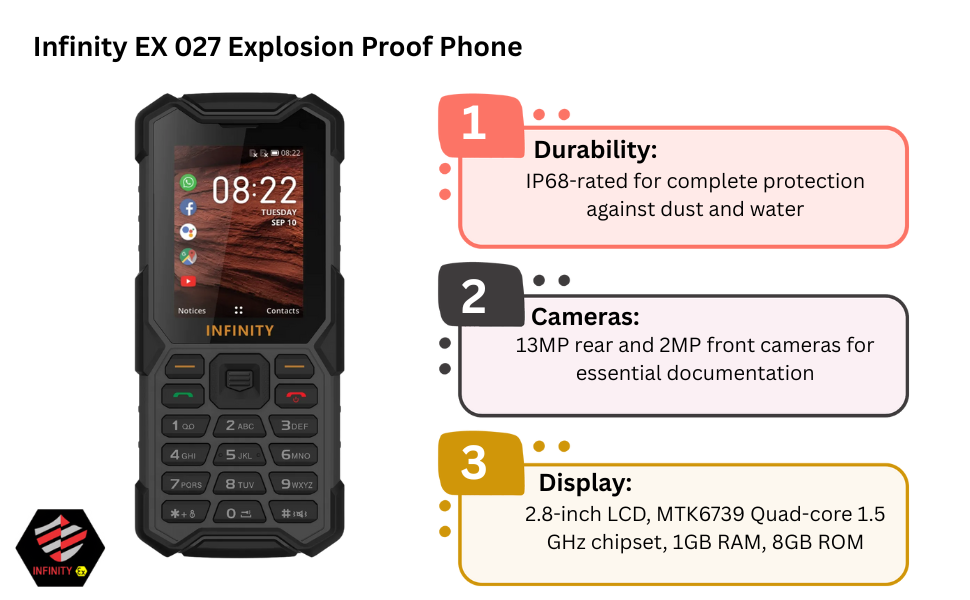
ATEX-certified phones and radios allow safe communication during emergencies.
-
Ensure coordination without risking ignition.
5. Control Panels and Switchgear
-
Designed to contain any internal sparks.
-
Maintain safe plant operations under explosive atmospheres.
6. Ventilation and Filtration Systems
-
Reduce gas buildup inside confined areas.
-
Ensure a safe working environment.
Benefits of ATEX Devices in Gas-Fired Power Plants
-
Explosion Prevention – Reduces risk of gas ignition.
-
Worker Safety – Protects employees from hazardous conditions.
-
Compliance with ATEX & IECEx – Meets strict safety regulations.
-
Operational Continuity – Prevents downtime caused by accidents.
-
Lower Insurance Costs – Certified devices reduce liability risks.
-
Reputation Protection – Demonstrates commitment to safety.
Compliance and Legal Requirements
Gas-fired power plants must comply with:
-
ATEX Directive 2014/34/EU – Equipment safety standards.
-
ATEX Directive 1999/92/EC – Worker protection guidelines.
-
ATEX certification – International standard for explosion-proof equipment.
Failure to adopt ATEX devices in gas-fired power plants can lead to:
-
Regulatory fines and penalties.
-
Insurance claim rejections.
-
Major safety incidents and reputational damage.
Best Practices for Implementing ATEX Devices
-
Conduct hazardous area classification (Zone 0, 1, 2 for gases).
-
Use only certified equipment in relevant zones.
-
Train workers on ATEX safety requirements.
-
Inspect and maintain devices regularly.
-
Integrate gas monitoring systems for real-time safety.
Future Trends in Gas Plant Safety
The role of ATEX devices in gas-fired power plants is evolving with technology:
-
Smart Sensors – IoT-enabled devices for real-time monitoring.
-
AI-Powered Predictive Maintenance – Detect faults before accidents occur.
-
Energy-Efficient Explosion-Proof Equipment – Reduce power consumption.
-
Remote Monitoring Solutions – Improve plant safety without physical presence.
Conclusion
Gas-fired power plants play a vital role in global energy production, but they operate under hazardous conditions with significant explosion risks. By integrating ATEX devices in gas-fired power plants, companies can ensure compliance, protect workers, and maintain continuous operations.
From motors and lighting to gas detection and communication systems, every ATEX-certified device contributes to building a safer plant environment. With evolving technologies like IoT and AI, the future of explosion safety in gas-fired power plants looks even more secure.
In short, ATEX devices are not just regulatory requirements—they are the backbone of safe, efficient, and compliant power generation.
FAQs about ATEX Devices in Gas-Fired Power Plants
1. What are ATEX devices in gas-fired power plants?
They are explosion-proof systems designed for safe operation in hazardous gas environments.
2. Why are ATEX devices essential in gas-fired plants?
Because they prevent ignition of flammable gases and vapors.
3. Which ATEX devices are commonly used in gas power plants?
Motors, lighting, sensors, control panels, and communication devices.
4. What ATEX zones apply to gas-fired facilities?
Zone 0, Zone 1, and Zone 2 depending on gas concentration risks.
5. Are ATEX devices legally required in gas plants?
Yes, EU law mandates their use under the ATEX Directive.
6. How do ATEX sensors help in gas plants?
They detect gas leaks and trigger alarms or shutdowns.
7. Can uncertified devices be used in gas-fired plants?
No, uncertified equipment can cause explosions.
8. What is the difference between ATEX?
ATEX is EU-based, while ATEX is an international certification system.
9. How often should ATEX devices be inspected?
Every 6–12 months or as per safety audits.
10. Do ATEX devices reduce operational costs?
Yes, by preventing downtime and accidents.
11. Can ATEX phones be used in gas-fired plants?
Yes, they ensure safe communication in explosive zones.
12. Do ATEX devices improve plant efficiency?
Yes, they allow safe continuous operation without disruptions.
13. What industries besides energy use ATEX devices?
Oil & gas, mining, petrochemicals, and pharmaceuticals.
14. Are ATEX devices future-ready?
Yes, with IoT and AI integration, they are becoming smarter and more efficient.
15. What is the biggest benefit of ATEX devices in gas-fired plants?
They ensure explosion prevention while keeping operations compliant and safe.
Industrial Applications & Real-World Use Cases
In hazardous industrial environments such as oil refineries, petrochemical plants, offshore platforms, and mining operations, reliable communication is a critical safety requirement. Workers in Zone 1 and Zone 21 classified areas face constant exposure to flammable gases, vapors, and combustible dust. Any electronic device used must be intrinsically safe to prevent ignition.
Oil & Gas Operations
Field engineers on drilling rigs, well pads, and production platforms rely on ATEX certified devices for work order management, real-time communication with control rooms, digital permit-to-work systems, and photographic documentation. Our devices are deployed across ADNOC, Saudi Aramco, KOC, KNPC, ONGC, Petrobras, and Shell facilities worldwide.
Refinery & Petrochemical Safety
Process safety management requires continuous communication between operators, maintenance technicians, and HSE personnel. ATEX phones enable instant push-to-talk during turnarounds, emergency responses, and inspection rounds. Explosion-proof tablets allow viewing P&IDs and digital checklists in the field.
Offshore Platform Operations
Offshore environments present salt spray corrosion, extreme weather, and limited charging infrastructure. Our IP68-rated devices withstand these conditions while maintaining Zone 1 certification for crane coordination, emergency mustering, and helicopter manifesting.
Safety Compliance Standards
- ATEX Directive 2014/34/EU — European explosive atmospheres standard
- Ex ia IIC T4 Gb — Zone 1 intrinsic safety for gas groups
- Ex ia IIIC T135°C Db — Zone 21 dust protection
- IP68 — Dust and water protection
- MIL-STD-810H — Military-grade durability
Browse Products → | Request Quote → | Certifications →
Related ATEX Products & Resources
Explore our range of ATEX-certified devices for hazardous areas: