


Class 1 Explosion Proof: 5 Smart Ways to Boost Safety & Reduce Risk
Class 1 Explosion Proof standards help boost safety and reduce explosion risk in hazardous areas through certified equipment and compliant design.
Introduction
What Does “Class 1 Explosion Proof” Mean?
Class 1 Explosion Proof refers to equipment that is specifically designed and certified for areas where flammable gases, vapors, or liquids are likely to be present in normal operation.
This classification originates from the National Electrical Code (NEC) and is widely used in North America and globally recognized through equivalent ATEX systems.
In simple terms, Class 1 defines the type of hazardous substance present — namely, gases and vapors — while “Explosion Proof” indicates that the equipment can contain any internal explosion and prevent it from spreading to the external atmosphere.
Understanding the NEC Classification System
The NEC (National Electrical Code) divides hazardous areas into Classes, Divisions, and Groups to categorize risks:
-
Class I – Locations with flammable gases or vapors (e.g., methane, propane, acetylene)
-
Class II – Locations with combustible dusts (e.g., grain dust, coal dust)
-
Class III – Locations with easily ignitable fibers or flyings (e.g., textiles, woodworking)
For Class 1 Explosion Proof environments, the presence of gases or vapors makes ignition prevention critical.
Division System:
-
Division 1: Hazardous materials are present under normal operating conditions.
-
Division 2: Hazardous materials are only present under abnormal conditions (e.g., accidental leaks).
So, an area labeled Class 1, Division 1 is more dangerous and requires higher safety protection than Class 1, Division 2.
Groups Within Class 1
To further refine the classification, Class 1 locations are divided into groups based on the type of gas or vapor present:
| Group | Example Substances | Typical Industries |
|---|---|---|
| A | Acetylene | Welding, chemical processing |
| B | Hydrogen, butadiene | Refineries, laboratories |
| C | Ethylene, cyclopropane | Petrochemical plants |
| D | Propane, gasoline vapors | Oil & gas, fuel depots |
Each group has different ignition temperatures and explosion pressures, so Class 1 Explosion Proof devices must be tested accordingly.
Design Principles of Class 1 Explosion Proof Equipment
The engineering design behind Class 1 Explosion Proof equipment focuses on containment and isolation rather than elimination of internal explosions.
Key design features include:
-
Flamepath Enclosures: Engineered joints and threaded seals prevent internal explosions from escaping.
-
Pressure-Resistant Housing: The casing is strong enough to withstand internal ignition without rupturing.
-
Temperature Control: Surfaces are kept below ignition temperatures of surrounding gases.
-
Cable Glands and Seals: Prevent flames from escaping through wiring entries.
This design ensures that if a spark or ignition occurs inside the equipment, it won’t ignite the surrounding atmosphere.
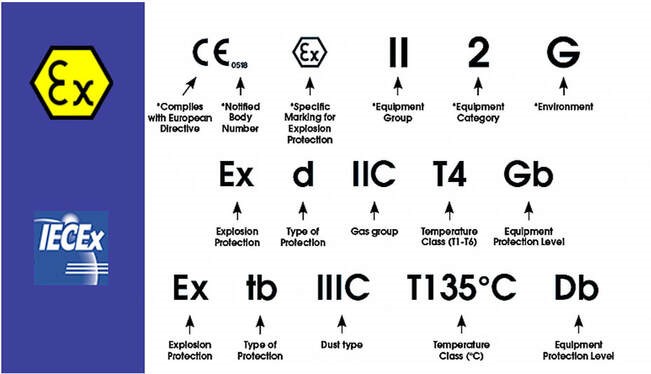
Standards and Certifications
Several international standards define the requirements for Class 1 Explosion Proof products:
-
NEC 500 / 505: U.S. National Electrical Code standards for hazardous areas
-
UL 1203: Underwriters Laboratories standard for explosion-proof equipment
-
CSA C22.2 No. 30: Canadian Standards Association equivalent
-
ATEX Directive 2014/34/EU: European Union regulation for explosive atmospheres
-
IECEx Scheme: International certification system under IEC 60079 standards
Manufacturers like Infinity-Ex, Warom, and Pepperl+Fuchs design products certified under these frameworks to ensure compliance across regions.
Examples of Class 1 Explosion Proof Equipment
-
Explosion-Proof Lighting Fixtures – For safe illumination in oil rigs and refineries
-
Explosion-Proof Junction Boxes – For electrical wiring in hazardous zones
-
Class 1 Explosion Proof Smartphones and Tablets – For industrial communication and data access
-
Motors and Switches – Designed with sealed housings to prevent ignition
-
Gas Detectors – For monitoring flammable gases in production facilities
Using Class 1 Explosion Proof equipment ensures that normal operations do not cause sparks or ignition, even during faults or overloads.
Industries That Require Class 1 Explosion Proof Devices
The use of Class 1 certified devices is mandatory in any industry where explosive gas mixtures may form:
-
Oil & Gas Exploration
-
Petrochemical Refineries
-
Pharmaceutical Manufacturing
-
Mining Operations
-
Chemical Storage and Handling
-
Fuel Distribution Terminals
In these industries, worker safety and environmental protection depend on proper equipment certification.
Testing and Certification Process
To earn a Class 1 Explosion Proof certification, products undergo rigorous testing, including:
-
Explosion containment verification
-
Flame transmission testing
-
Pressure resistance assessment
-
Surface temperature measurement
-
Ingress protection (IP rating) validation
Only after passing all evaluations are products approved and marked with relevant labels (e.g., “Class I, Div 1, Groups B, C, D”).
Difference Between Explosion Proof and Intrinsically Safe
While both terms are used for hazardous locations, they differ fundamentally:
| Feature | Explosion Proof | Intrinsically Safe |
|---|---|---|
| Principle | Contains internal explosion | Limits energy to prevent ignition |
| Enclosure | Heavy, sealed housing | Light, circuit-level protection |
| Use Case | Fixed installations | Portable electronics, sensors |
| Typical Marking | Class 1, Div 1 | Ex ia / Ex ib |
In many cases, Class 1 Explosion Proof equipment complements intrinsically safe systems for layered protection.
Importance of Maintenance and Inspection
Proper maintenance is vital for preserving the safety integrity of Class 1 Explosion Proof devices.
Regular inspection ensures that flamepaths, seals, and enclosures remain intact and free from corrosion or mechanical damage.
Recommended practices include:
-
Visual inspection every 6–12 months
-
Cleaning of joints and threads
-
Verification of certification labels
-
Replacement of damaged gaskets or bolts
Non-compliance can compromise safety and void certification approvals.
Future Trends in Explosion-Proof Technology
The industrial world is shifting toward smart, connected, and mobile solutions — and Class 1 Explosion Proof devices are evolving too.
Emerging trends include:
-
Integration of IoT sensors for real-time monitoring
-
Use of lightweight composite enclosures
-
Adoption of 5G-compatible explosion-proof smartphones
-
Advanced battery protection systems
-
AI-driven diagnostics for preventive maintenance
These innovations combine digitalization with safety, enabling smarter hazardous operations.
Conclusion
Class 1 Explosion Proof equipment represents the highest standard of protection for operations involving flammable gases and vapors.
By adhering to strict design, testing, and certification requirements, manufacturers ensure that industrial environments remain safe, productive, and compliant with international safety laws.
For businesses operating in hazardous areas, choosing the right Class 1 Explosion Proof devices — from lighting to mobile communication tools — is not just a compliance measure but a life-saving necessity.
Industrial Applications & Real-World Use Cases
In hazardous industrial environments such as oil refineries, petrochemical plants, offshore platforms, and mining operations, reliable communication is a critical safety requirement. Workers in Zone 1 and Zone 21 classified areas face constant exposure to flammable gases, vapors, and combustible dust. Any electronic device used must be intrinsically safe to prevent ignition.
Oil & Gas Operations
Field engineers on drilling rigs, well pads, and production platforms rely on ATEX certified devices for work order management, real-time communication with control rooms, digital permit-to-work systems, and photographic documentation. Our devices are deployed across ADNOC, Saudi Aramco, KOC, KNPC, ONGC, Petrobras, and Shell facilities worldwide.
Refinery & Petrochemical Safety
Process safety management requires continuous communication between operators, maintenance technicians, and HSE personnel. ATEX phones enable instant push-to-talk during turnarounds, emergency responses, and inspection rounds. Explosion-proof tablets allow viewing P&IDs and digital checklists in the field.
Offshore Platform Operations
Offshore environments present salt spray corrosion, extreme weather, and limited charging infrastructure. Our IP68-rated devices withstand these conditions while maintaining Zone 1 certification for crane coordination, emergency mustering, and helicopter manifesting.
Safety Compliance Standards
- ATEX Directive 2014/34/EU — European explosive atmospheres standard
- Ex ia IIC T4 Gb — Zone 1 intrinsic safety for gas groups
- Ex ia IIIC T135°C Db — Zone 21 dust protection
- IP68 — Dust and water protection
- MIL-STD-810H — Military-grade durability
Browse Products → | Request Quote → | Certifications →
Related ATEX Products & Resources
Explore our range of ATEX-certified devices for hazardous areas: