


Explosion-Proof Axial Fan: 5 Smart Ways to Boost Airflow & Cut Risk in Hazardous Zones
Explosion-Proof Axial Fan improves ventilation in hazardous zones by boosting airflow, reducing explosive risks, and supporting safer industrial operations.
Introduction
Explosion-Proof Axial Fan industrial environments mein ventilation ka ek essential solution hai, khaaskar un facilities ke liye jahan flammable gases, vapors, ya combustible dust maujood hoti hai. Aise hazardous areas mein conventional ventilation systems spark ya excessive heat generate kar sakte hain, jo explosion ka serious risk paida karte hain. Is liye industries safety aur performance dono ko ensure karne ke liye explosion-proof axial fans par bharosa karti hain.
Yeh article explosion-proof axial fans ka detailed overview pesh karta hai, jismein unka design, working mechanism, common industrial applications, aur explosion prevention mein unki ahmiyat ko wazeh kiya gaya hai.
What Is an Explosion-Proof Axial Fan?
An explosion-proof axial fan is a type of industrial ventilation equipment designed to move air safely in areas where combustible gases, vapors, or dust might be present.
Unlike regular fans, it is built using explosion-proof motors, non-sparking materials, and sealed housings that prevent ignition sources from coming into contact with the surrounding atmosphere.
These fans are certified under ATEX, ATEX, or NFPA standards, ensuring full compliance with safety regulations in hazardous environments.
How Does an Explosion-Proof Axial Fan Work?
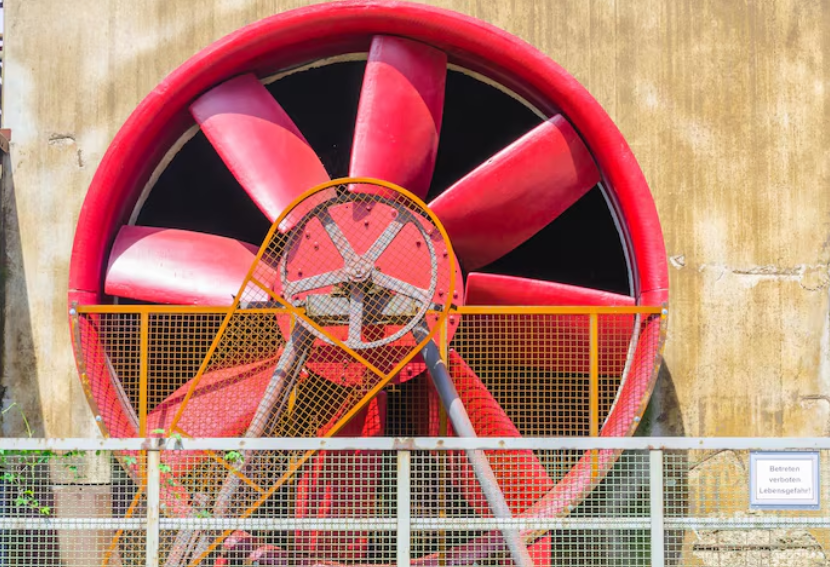
The axial fan design moves air in a straight line parallel to the shaft, producing high airflow with low pressure.
In explosion-proof models, several protective mechanisms are added:
-
Flameproof Enclosure: The motor is encased in a housing that can contain any internal explosion without allowing it to escape.
-
Non-Sparking Blades: Fan blades are made from materials like aluminum-magnesium alloys, bronze, or anti-static composites.
-
Sealed Electrical Components: Prevents sparks from electrical parts from reaching external gases.
-
Grounding System: Reduces the risk of static charge buildup.
-
Thermal Protection: Prevents overheating, which could act as an ignition source.
ATEX Zone Classification for Explosion-Proof Fans
Explosion-proof axial fans are certified according to ATEX Zone classifications, defining their suitability for hazardous atmospheres:
| Zone | Environment | Description |
|---|---|---|
| Zone 1 | Gas present occasionally | Medium risk |
| Zone 2 | Gas unlikely, short duration | Low risk |
| Zone 21 | Combustible dust occasionally present | Medium dust risk |
| Zone 22 | Dust unlikely, short duration | Low dust risk |
Explosion-proof axial fans are typically rated for Zone 1, Zone 2, Zone 21, or Zone 22, depending on the application.
Key Features of Explosion-Proof Axial Fans
-
ATEX & IECEx certified Motor
-
Anti-sparking aluminum or bronze impeller
-
Rugged steel or stainless-steel housing
-
Corrosion-resistant coating
-
Thermal overload protection
-
IP65–IP68 enclosure rating
-
Low noise and vibration levels
-
Optional reversible airflow direction
-
Easy wall, duct, or ceiling mounting options
Applications of Explosion-Proof Axial Fans
Explosion-proof axial fans are essential for hazardous environments where gases, vapors, or dust can accumulate.
Common applications include
-
Oil & Gas Refineries – For safe ventilation in pumping stations and storage tanks.
-
Chemical Processing Plants – To remove flammable vapors and ensure air circulation.
-
Paint Booths and Coating Areas – Prevents buildup of volatile organic compounds (VOCs).
-
Battery Rooms – Safely disperses hydrogen gas during charging operations.
-
Pharmaceutical and Food Industries – For dust or alcohol-based cleaning environments.
-
Marine & Offshore Platforms – Ensures fresh air flow in confined hazardous areas.
-
Power Generation Facilities – Used in transformer rooms and gas turbine enclosures.
Benefits of Using Explosion-Proof Axial Fans
-
Enhanced Safety – Prevents ignition of flammable gases or dust.
-
Compliance with ATEX Standards – Ensures legal and operational compliance.
-
Continuous Ventilation – Keeps air fresh and free from explosive concentrations.
-
Durability – Designed for harsh and corrosive environments.
-
Energy Efficiency – Provides high airflow with lower power consumption.
-
Reduced Maintenance – Long service life due to heavy-duty construction.
Design and Construction
The construction of an explosion-proof axial fan focuses on mechanical and electrical safety:
| Component | Description |
|---|---|
| Motor | Flameproof, sealed, and temperature-protected. |
| Blades | Anti-static, corrosion-resistant, and balanced for minimal vibration. |
| Housing | Made from heavy-duty steel or aluminum alloy. |
| Bearings | Grease-lubricated and sealed to prevent ignition. |
| Cables & Terminals | Routed through certified explosion-proof glands. |
Certifications and Compliance Standards
Explosion-proof axial fans must comply with the following standards and directives:
-
ATEX Directive 2014/34/EU (Europe)
-
ATEX Scheme (International)
-
NFPA 70 / NEC Class I, Division 1 & 2 (North America)
-
EN 14986:2017 – Design of fans working in explosive atmospheres
-
ISO 9001 Certified Manufacturing
-
Ingress Protection (IP) Ratings – Typically IP65 to IP68
Explosion-Proof Axial Fan vs. Centrifugal Fan
| Feature | Axial Fan | Centrifugal Fan |
|---|---|---|
| Airflow | High volume, low pressure | Low volume, high pressure |
| Direction | Linear (axial) | Radial (perpendicular) |
| Space Requirement | Compact | Larger installation |
| Ideal Use | General ventilation | Local exhaust, dust extraction |
| Explosion-Proof Versions | Available | Available |
Thus, an explosion-proof axial fan is the better choice for large spaces needing high airflow, while centrifugal fans suit point-source ventilation.
Maintenance and Safety Guidelines
-
Regular Inspections – Check for vibration, noise, or corrosion.
-
Clean Fan Blades – Remove dust or residues that may accumulate.
-
Verify Grounding Connections – To prevent static buildup.
-
Follow Manufacturer’s Service Schedule – Only trained personnel should handle repairs.
-
Replace Damaged Parts with Certified Components Only.
Top Manufacturers of Explosion-Proof Axial Fans
Some of the globally recognized manufacturers include:
-
Sodeca (Spain)
-
FläktGroup (Germany)
-
Systemair (Sweden)
-
ZIEHL-ABEGG (Germany)
-
Axair Fans (UK)
-
Bartec (Germany)
-
Rosenberg Ventilatoren (Germany)
-
Teral (Japan)
These brands offer explosion-proof axial fans designed for both gas and dust hazardous zones, with ATEX certifications.
Future of Explosion-Proof Ventilation Systems
With the growing adoption of Industry 4.0 and IoT-enabled equipment, explosion-proof axial fans are now being integrated with smart sensors and remote monitoring systems.
These technologies allow predictive maintenance, energy optimization, and real-time fault detection — reducing downtime and improving overall plant safety.
Conclusion
An explosion-proof axial fan is more than a ventilation device — it’s a critical component of industrial safety systems. Designed to prevent ignition in hazardous atmospheres, it ensures safe airflow, regulatory compliance, and operational efficiency.
Whether used in refineries, paint booths, or chemical plants, these fans protect both workers and assets by maintaining controlled, explosion-free environments.
Investing in the right ATEX-certified explosion-proof axial fan guarantees long-term reliability and safety in every critical industrial operation.
FAQs About Explosion-Proof Axial Fans
1. What is an explosion-proof axial fan used for?
It is used to safely ventilate areas where flammable gases, vapors, or dust are present.
2. What makes a fan explosion-proof?
Explosion-proof fans have sealed motors, non-sparking blades, and grounded enclosures to prevent ignition.
3. What certifications should an explosion-proof fan have?
ATEX, and NFPA certifications are essential for hazardous zone compliance.
4. What is the difference between Zone 1 and Zone 2 fans?
Zone 1 fans are for high-risk areas; Zone 2 fans are for occasional-risk zones.
5. Can explosion-proof fans be used outdoors?
Yes, models with IP65 or higher ratings can withstand outdoor conditions.
6. Do explosion-proof axial fans require special installation?
Yes, only certified technicians should install them following ATEX standards.
7. Are explosion-proof fans energy-efficient?
Modern designs offer high airflow efficiency while maintaining safety.
8. What materials are used in explosion-proof fans?
Common materials include aluminum, stainless steel, and anti-static composites.
9. Can I use a standard fan in a hazardous area?
No, only explosion-proof certified fans should be used to prevent ignition risks.
10. How often should these fans be inspected?
Routine checks every 6–12 months are recommended.
11. Do they support variable speed control?
Yes, explosion-proof motors can be paired with certified variable frequency drives (VFDs).
12. Are explosion-proof fans noisy?
No, most are designed to operate quietly despite their heavy-duty performance.
13. What industries need explosion-proof fans?
Oil & gas, chemical, pharmaceutical, food processing, and marine sectors.
14. Can they handle corrosive gases?
Yes, when made from corrosion-resistant materials like stainless steel.
15. How long do explosion-proof axial fans last?
Typically 10–15 years with proper maintenance.
Related ATEX Products & Resources
Explore our range of ATEX-certified devices for hazardous areas: