


Intrinsically Safe PLC: 5 Smart Ways to Boost Safety & Reduce Risk (2025)
Intrinsically Safe PLC improves control system safety in hazardous areas by reducing risk, ensuring compliance, and boosting operational reliability in 2025.
Introduction
In industries where safety and automation intersect — such as oil and gas, mining, petrochemical, or pharmaceutical manufacturing — reliable control systems are crucial. However, operating electronics in explosive environments comes with significant risks. Traditional programmable logic controllers (PLCs) may not meet safety standards in areas with flammable gases or dust.
That’s where the Intrinsically Safe PLC comes into play. Designed specifically for hazardous zones, this technology ensures safe, efficient, and compliant control of industrial processes without compromising performance.
This article explores what an intrinsically safe PLC is, how it works, the certification standards involved, and why it’s becoming an essential part of modern industrial automation systems.
What Is an Intrinsically Safe PLC?
An Intrinsically Safe PLC is a programmable logic controller engineered to operate safely in hazardous environments where explosive gases, vapors, or dust are present.
The term “intrinsically safe” means that the device’s electrical circuits are designed to prevent the release of sufficient energy — thermal or electrical — that could ignite an explosive atmosphere.
Unlike explosion-proof systems that rely on containment, intrinsically safe PLCs focus on energy limitation, making them a safer and more efficient option for monitoring and controlling processes in hazardous areas.
Key Features
-
Low voltage and current design to prevent ignition.
-
Certified under standards such as ATEX, UL, or FM.
-
Compatible with field devices in Zones 0, 1, or 2.
-
Designed for real-time control and monitoring.
-
Enhanced communication capabilities for remote operations.
Why Intrinsic Safety Is Critical
In hazardous industries, even the smallest spark can lead to catastrophic consequences.
Intrinsic safety ensures that electronic systems like PLCs can function in explosive atmospheres without becoming ignition sources.
-
Worker Safety – Prevents explosions caused by electrical faults.
-
Regulatory Compliance – Meets global hazardous area standards.
-
Cost Efficiency – Reduces need for heavy explosion-proof enclosures.
-
Simplified Maintenance – No need to de-energize entire systems during servicing.
-
Reliability – Ensures consistent performance in demanding environments.
How an Intrinsically Safe PLC Works
An Intrinsically Safe PLC operates by limiting the energy available in its electrical circuits to levels below the ignition threshold of hazardous substances.
Core Principles of Operation
-
Energy Limitation
The PLC’s circuitry is designed to restrict current and voltage output, ensuring it cannot produce a spark or hot surface. -
Barriers and Isolators
These components act as safety interfaces between safe (non-hazardous) and hazardous zones, controlling energy flow. -
Temperature Control
The PLC maintains surface temperatures below ignition limits, even during faults. -
Fail-Safe Design
Redundant safety systems ensure that even in case of failure, the unit remains non-ignitive.
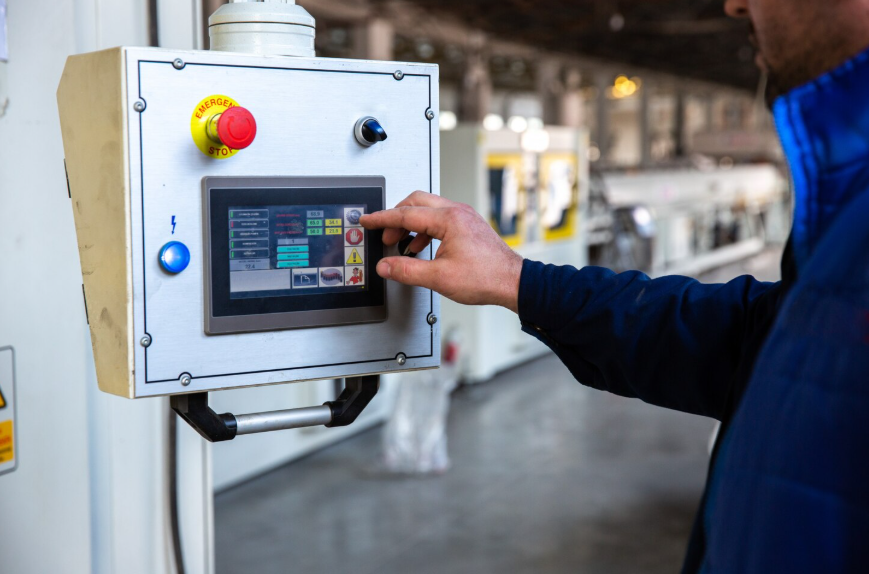
System Architecture: Intrinsically Safe PLC Setup
A typical Intrinsically Safe PLC system includes several interconnected components designed for optimal safety and functionality:
-
Power Supply Unit (IS-rated)
-
Input/Output (I/O) Modules with intrinsic safety barriers
-
Communication Interfaces (Ethernet, Modbus, PROFIBUS)
-
Sensors and Actuators certified for hazardous zones
-
Control Software for process automation
This modular design allows engineers to configure scalable systems without compromising safety or performance.
Standards and Certifications
Compliance with international standards is essential for any Intrinsically Safe PLC used in hazardous environments.
1. ATEX (Europe)
Ensures the PLC meets EU requirements for explosive atmospheres (Directive 2014/34/EU).
2. ATEX (Global)
Provides globally recognized certification for equipment safety in explosive atmospheres.
3. UL and FM (North America)
Certify products based on stringent U.S. standards for intrinsic safety and explosion prevention.
4. CSA (Canada)
Verifies compliance with Canadian electrical safety regulations.
Each certification ensures that the PLC can safely function within defined hazardous zones.
Hazardous Zone Classifications
Different hazardous environments require different protection levels.
Gas/Vapor Environments
-
Zone 0 – Continuous presence of explosive gases.
-
Zone 1 – Likely presence during operations.
-
Zone 2 – Occasional or short-term presence.
Dust Environments
-
Zone 20 – Constant dust presence.
-
Zone 21 – Frequent presence.
-
Zone 22 – Rare presence of dust.An Intrinsically Safe PLC can be designed to operate in Zones 1 and 2, and sometimes Zone 0 with specific configurations.
Applications of Intrinsically Safe PLCs
These PLCs are used wherever process automation and explosion prevention are equally important.
Common Applications:
-
Oil and Gas Processing Plants
Control of drilling, refining, and storage systems. -
Chemical Manufacturing
Managing reactions and blending operations. -
Pharmaceutical Industry
Ensuring safe mixing and environmental monitoring. -
Mining Operations
Automation in underground explosive environments. -
Food and Beverage
Handling of flammable powders and cleaning solvents. -
Water Treatment Facilities
Controlling pumps and sensors in chemical dosing zones.
Advantages of Intrinsically Safe PLC Systems
| Feature | Benefit |
|---|---|
| Compact Design | Space-saving and lightweight |
| No Explosion-Proof Housing | Reduces cost and maintenance |
| Safe Hot-Swapping | Components can be serviced live |
| Reliable Communication | Stable operation across long distances |
| Scalable Architecture | Easy expansion for larger systems |
Comparison: Intrinsically Safe PLC vs Explosion-Proof Systems
| Aspect | Intrinsically Safe PLC | Explosion-Proof System |
|---|---|---|
| Protection Method | Energy limitation | Containment |
| Weight and Size | Compact and lightweight | Heavy enclosure |
| Maintenance | Easier and faster | Requires shutdown |
| Cost | Moderate initial cost | High installation cost |
| Certification | ATEX, UL, FM | Same but with enclosure focus |
| Ideal Zones | Zone 0, 1, 2 | Zone 1, 2 |
This comparison highlights how intrinsic safety provides a more flexible and cost-effective solution in hazardous areas.
Integration with Industrial Automation
Modern intrinsically safe PLCs support advanced communication protocols and digital technologies that enhance automation efficiency.
Key Integration Capabilities
-
SCADA Systems – Real-time monitoring and control.
-
IoT Devices – Secure data collection from field sensors.
-
Edge Computing – Localized data processing for faster response.
-
Cloud Connectivity – Remote access and predictive maintenance.
This connectivity transforms traditional safety systems into smart, data-driven platforms that improve productivity while maintaining compliance.

Maintenance and Inspection Guidelines
Maintaining an Intrinsically Safe PLC involves regular inspection and compliance verification.
Best Practices:
-
Check Label Integrity – Ensure certification marks are visible.
-
Inspect Barriers and Cabling – Look for damage or corrosion.
-
Review Logs – Monitor performance and alarms.
-
Verify Grounding – Prevent static discharge risks.
-
Follow Manufacturer Guidelines – Use only certified replacement parts.
Routine maintenance not only ensures safety but also extends the lifespan of your automation system.
Challenges in Implementing Intrinsically Safe PLCs
Despite their advantages, intrinsically safe systems can present implementation challenges:
-
Complex design and documentation requirements.
-
Higher upfront cost than standard PLCs.
-
Limited availability of compatible third-party devices.
-
Specialized engineering expertise required.
However, these challenges are outweighed by the long-term safety, compliance, and reliability benefits.
Future of Intrinsically Safe Automation
The future of Intrinsically Safe PLC technology is closely tied to advancements in smart manufacturing and Industry 4.0.
Emerging trends include:
-
Wireless intrinsically safe control systems.
-
Integration with AI-based predictive maintenance.
-
Advanced cybersecurity in safety networks.
-
Compact modular PLCs with cloud connectivity.
These innovations will make intrinsically safe automation even more intelligent, interconnected, and efficient.
Conclusion
In hazardous industries, safety and automation must coexist seamlessly. The Intrinsically Safe PLC represents a major step forward in enabling precise control, monitoring, and data processing within explosive environments — without sacrificing safety.
By combining intrinsic safety principles with modern automation technologies, these PLCs deliver unmatched reliability, regulatory compliance, and operational efficiency.
As industries continue to embrace digital transformation, intrinsically safe PLCs will remain a cornerstone of safe industrial automation systems worldwide.
FAQs
1. What does “intrinsically safe” mean for PLCs?
It means the PLC is designed to prevent ignition in explosive atmospheres by limiting electrical energy.
2. Where are intrinsically safe PLCs used?
In oil, gas, chemical, mining, and pharmaceutical industries where flammable substances are present.
3. How is intrinsic safety different from explosion-proof design?
Intrinsic safety limits energy; explosion-proof designs contain explosions.
4. What certifications are required for intrinsically safe PLCs?
ATEX, IECEx, UL, FM, or CSA, depending on the region.
5. Can intrinsically safe PLCs be used in Zone 0?
Yes, with appropriate design and certification.
6. What are the main advantages of using these PLCs?
Safety, reduced maintenance, lower installation cost, and compliance.
7. Do intrinsically safe PLCs support modern communication protocols?
Yes, they support Ethernet, Modbus, and industrial IoT integrations.
8. What’s the lifespan of an intrinsically safe PLC?
Typically 10–15 years, depending on environment and maintenance.
9. Are intrinsically safe PLCs expensive?
The initial cost may be higher, but they save money in long-term maintenance.
10. How can I verify PLC certification?
Check the product’s label, certification number, and official database (like ATEX online).
Related ATEX Products & Resources
Explore our range of ATEX-certified devices for hazardous areas: