


Best Explosion-Proof Equipment Certification Guide (2026)
Introduction:
The safety of people and property largely depends on explosion-proof equipment installed in hazardous areas, including oil refineries, chemical plants, and mines. Different international markets impose strict requirements on such equipment, in line with high safety standards. This article provides comprehensive information about global certification standards for explosion-proof equipment to help both manufacturers and buyers navigate complex compliance regulations.
Understanding Explosion-Proof Equipment
Devices classified as explosion-proof contain ignition and explosion processes within themselves, preventing them from spreading to the external environment. Such equipment provides essential protection in areas with flammable gases, vapors, dust, or fibers.
Overview of Global Standards
Regulatory bodies and certification standards for explosion-proof equipment exist separately in each country or within specific regional organizations. Any manufacturer wishing to enter target markets must comply with local certification requirements to continue operations.
Key Certification Bodies and Standards
| Region | Certification Body | Certification Mark | Relevant Standard |
|---|---|---|---|
| United States | Underwriters Laboratories (UL) / FM Approvals | UL Listed / FM Approved | NEC (NFPA 70), UL 1203 |
| Canada | Canadian Standards Association (CSA) | CSA Mark | C22.2 No. 30, No. 60079 |
| European Union | ATEX Directive | CE with ATEX marking | EN 60079 series |
| International | System | Certificate | IEC 60079 series |
| China | CCC / NEPSI | CCC / Ex Mark | GB3836 series |
| Japan | TIIS | TIIS Marking | IEC 60079 + national decrees |
| Brazil | INMETRO | INMETRO Marking | ABNT NBR IEC 60079 |
| Russia / EAEU | EAC (TR CU certification) | EAC Marking | TR CU 012/2011 |
| India | PESO | PESO Approval | IEC 60079 / IS 5572 |
Explosion-proof Equipment certification Requirements in North America
United States
Requirements for explosion-proof equipment at any U.S. facility are aligned with the National Electrical Code (NEC), specifically Articles 500–506. Certification must be obtained from UL, FM Approvals, or other recognized testing bodies. UL 1203 is the standard requirement for explosion-proof enclosures.
Canada
Canada builds on UL standards but uses CSA standards in line with the Canadian Electrical Code (CEC). The main certification for hazardous areas is CSA C22.2 No. 60079.
European Union and the ATEX Directive
The official EU directive, known as the ATEX Directive (2014/34/EU), applies to explosion-proof equipment sold within the EU. Certification involves risk assessment through equipment groups and categories and product classification.
-
Group I: For mining operations
-
Group II: For industrial surface facilities
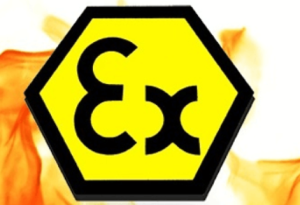
Each product must carry a CE mark with the ATEX Ex symbol and a declaration of conformity.
: A Global Standard
The System operates under the IEC 60079 series and provides internationally recognized certification schemes. simplifies access to global markets and reduces the need for multiple certifications, though participation is voluntary. Key certificates include:
-
Certificate of Conformity (CoC)
-
Quality Assessment Report (QAR)
allows easier access to markets in regions like Australia, South Africa, and Southeast Asia.
Explosion-proof Equipment Certification Process
-
Hazardous Area Classification
Defines the zone category (Zone 0/1/2 or Division 1/2), determining equipment suitability. -
Product Design & Documentation
Product must follow explosion-proof design principles and include thorough documentation. -
Testing & Evaluation
Testing by accredited labs ensures compliance with international and regional certification standards. -
Factory Inspection / Quality Audits
Most certification systems require periodic factory inspections to maintain quality and compliance. -
Marking & Labeling
Products must be labeled with correct Ex symbols, zone classifications, and temperature ratings, complying with local labeling standards.
Explosion-proof Equipment Certification Overviews
China (CCC / NEPSI)
Standards GB3836 guide product testing and plant inspections. NEPSI and CQST are authorized to issue explosion-proof certifications. Compliance requires formal documentation and precise product labeling.
Japan (TIIS)
The TIIS (Technology Institution of Industrial Safety) operates in Japan. The system is based on IEC standards with national requirements. Certification is mandatory for hazardous areas, especially in petrochemical industries.
Brazil (INMETRO)
In Brazil, all explosion-proof equipment must be certified by INMETRO. Certification requires working with a Brazilian Designated Certification Body (OCD) and testing in local labs, with documentation in Portuguese.
Russia and EAEU (EAC Marking)
EAEU members include Russia, Belarus, and Kazakhstan. EAC certification follows Technical Regulation TR CU 012/2011. Certification and EAC marking are required for market entry in these countries.
India (PESO)
explosion-proof equipment certification in India must be approved by the Petroleum and Explosives Safety Organization (PESO). PESO aligns with ATEX but requires additional assessments and documentation. All equipment used in oil and chemical sectors must be PESO certified before use.
Explosion-Proof Equipment Certification Compliance
-
Mandatory for legal market operations across regulated industries globally.
-
Ensures equipment safety in hazardous environments, minimizing explosion risks.
-
Avoids legal penalties, sales bans, and recalls due to non-compliance.
-
Builds trust and credibility among customers by demonstrating product quality and professionalism.
-
Enhances operational efficiency, especially for companies in heavily regulated industries, by reducing risk and ensuring continuity.
Final Thoughts
To successfully enter global markets, manufacturers must ensure reliable explosion protection — that is, obtain proper certification for their equipment. IEC explosion-proof equipment certification is one of the many standards governing industries worldwide. Legal protection, customer safety, and long-term success depend on meeting the certification requirements of the markets you target.
Связанные продукты и ресурсы ATEX
Ознакомьтесь с нашим ассортиментом устройств с сертификацией ATEX: