


Explosive Atmospheres: 7 Must-Know ATEX Facts (2026)
Introduction:
In industries where hazardous environments are the norm, explosive atmospheres present constant danger. To mitigate these risks, ATEX certifications are essential. These international safety standards ensure that equipment and systems used in such conditions are thoroughly tested and compliant with strict safety protocols. Whether operating in oil and gas, chemical production, or mining, understanding ATEX certification is critical for global compliance and workplace safety.
What Are Explosive Atmospheres?
An explosive atmosphere is a mixture of air and flammable substances—gases, vapors, dust, or fibers—that can ignite under specific conditions. These conditions are prevalent in:
-
Oil and gas extraction
-
Chemical and petrochemical facilities
-
Mining operations
-
Pharmaceutical manufacturing
Explosions in these industries can lead to catastrophic damage, injury, and loss of life, making stringent safety certification a non-negotiable requirement.
Why Safety Standards Are Necessary
The need for internationally recognized safety standards stems from:
-
The high risk of combustion in industrial processes
-
Legal compliance and insurance requirements
-
Protection of life, equipment, and infrastructure
-
Ease of global trade through recognized certifications
This is where ATEX and come into play, each offering a framework for managing explosive atmosphere hazards.
What Is ATEX Certification?
Definition of ATEX
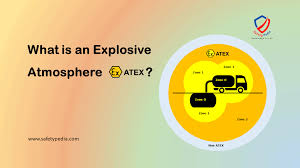
ATEX (from the French “Atmosphere Explosibles”) is a European Union directive that governs the equipment and protective systems used in explosive atmospheres. It outlines requirements for manufacturers and users to ensure the safety and integrity of installations.
ATEX Compliance Requirements
To achieve ATEX certification, a product must:
-
Be safe in both electrical and mechanical aspects
-
Be built using explosion-proof designs
-
Pass conformity assessments (third-party for higher risk categories)
-
Include proper documentation and technical files
ATEX Marking and Labeling
All ATEX-certified equipment must include:
-
The ATEX logo
-
Equipment category (e.g., Category I for mining, II for other industries)
-
Explosion group and temperature class
-
Manufacturer’s information and serial number
Benefits of ATEX Certification
-
Legally required in the EU and EEA countries
-
Ensures safer work environments
-
Streamlines market entry within Europe
ATEX certification helps companies gain trust in the European market while ensuring compliance with regional legislation.
What Is Certification?
Definition of

is an international certification scheme governed by the International Electrotechnical Commission (IEC). It validates compliance for equipment, services, and personnel in explosive atmospheres across global markets.
Compliance Requirements
certification includes:
-
Third-party testing of equipment
-
Quality audits and assessments
-
Ongoing surveillance and conformity checks
-
Complete transparency through publicly accessible certificates
Marking and Labeling
certified products feature:
-
The logo
-
Certificate reference number
-
Explosion protection technique (e.g., flameproof, intrinsically safe)
-
Equipment group and classification for gases/dusts
-
Clear operational guidelines
Benefits of Certification
-
Globally recognized certification
-
Facilitates access to markets in North America, Australia, Asia, and more
-
Higher trust and safety assurance due to strict third-party involvement
-
Reduces the need for multiple national approvals
certification provides a single, reliable standard for companies seeking international trade and operational expansion.
Key Differences Between ATEX
| Feature | ATEX | |
|---|---|---|
| Geographical Coverage | Mandatory in the European Union | Accepted worldwide (Australia, USA, Canada, etc.) |
| Certification Process | Allows self-certification for low-risk products | Requires independent testing by accredited bodies |
| Standard Basis | Based on EU directives | Based on IEC international standards |
| Documentation Requirements | Internal control with EU Declaration of Conformity | Comprehensive test reports and public access |
| Market Acceptance | Primarily EU | Broad international acceptance |
| Cost & Time | Generally cheaper and quicker | More expensive but offers broader market access |
Similarities Between ATEX
Despite differences, ATEX share key similarities:
-
Both systems are designed to reduce the risk of explosions
-
Rely on international standards developed by the IEC
-
Require strict compliance in equipment design and testing
-
Use detailed marking schemes for product identification
-
Demand robust documentation and traceability
Why Are These Certifications So Important?
Legal Compliance
Failure to comply with ATEX or can result in:
-
Legal penalties
-
Market access restrictions
-
Liability for damages and workplace accidents
Workplace Safety
Certified equipment reduces the likelihood of ignition in dangerous environments, thus safeguarding:
-
Personnel
-
Facilities
-
Business continuity
Business Opportunities
With ATEX certification, businesses can:
-
Expand into new international markets
-
Streamline approvals with recognized certification systems
-
Gain competitive advantage through safety assurance
Industry Benefits
Oil & Gas Sector
Maintains operational safety in offshore rigs, pipelines, and refineries.
Chemical Manufacturing
Prevents fire hazards from volatile substances in production.
Pharmaceuticals
Ensures safe handling of flammable solvents and powders.
Choosing Between ATEX
Key Considerations
-
If you’re targeting the EU, ATEX is legally required.
-
For global markets is preferred.
-
The type of equipment and its risk profile may determine the need for more rigorous testing.
Dual Certification
Many manufacturers pursue both ATEX certification to:
-
Maximize international reach
-
Build customer confidence
-
Simplify compliance in multi-region projects
Future Trends in Certification
-
Growing global preference for due to its universality
-
Moves to harmonize ATEX requirements
-
Adoption of digital technologies for faster compliance and traceability
-
Strengthened enforcement of safety in hazardous zones worldwide
Conclusion: Why ATEX Certification Matters
In environments where explosive atmospheres are part of daily operations, ensuring safety is a top priority. ATEX certifications serve as critical tools for minimizing risks, protecting personnel, and meeting legal and operational standards.
While ATEX remains essential for operations within the European Union offers unmatched global acceptance. Businesses aiming for broad market access and strong safety credibility often pursue dual certification. As industries evolve and regulations tighten, staying compliant with these standards isn’t just best practice—it’s vital.
Связанные продукты и ресурсы ATEX
Ознакомьтесь с нашим ассортиментом устройств с сертификацией ATEX: