


ATEX Oil and Gas: 5 Critical Safety & Compliance Rules (2025)
ATEX Oil and Gas safety standards help prevent explosions, manage risk, and ensure full compliance in hazardous industrial environments in 2025.
Introduction:
ATEX Oil and Gas hazardous environments mein safety aur compliance ensure karne ke liye ek critical standard hai. Oil aur gas industry mein explosive atmospheres ka risk hamesha hota hai, is liye ATEX regulations ka sahi implementation accidents ko prevent karta hai aur operations ko secure banata hai.
ATEX: What It Is and Why It Matters
ATEX is an acronym of the French ATmosphères EXplosives, meaning atmospheres containing explosive gases, vapours or dust. It comprises two decisive EU directives:
- ATEX 1999/92/EC Emphasis on safety of the workers with provisions on personal protection equipment, safety measures and zoning of work places.
- ATEX 2014/34/EU Establishes strict technical requirements in terms of the manufacture of equipment that is to be used in explosive atmospheres.
In the case of the companies that work in the ATEX Oil and Gas industry, ATEX is not only a formal obligation of the laws, but a vital precaution and an emblem of administrative responsibility. Global operators can also frequently achieve ATEX certification, which is analogous to ATEX but offers such international recognition without the EU.

ATEX Oil and Gas Safety
The most exceptional groups of ATEX Oil and Gasproducts are the following:
ATEX Heating Solutions
Extreme cold may interrupt operations by freezing valves, hardening fluids or disabling tools. ATEX-certified heating jackets and hoses with a rating extending across temperature ranges such as T6 to T3 ensure fluidity of operation in extreme temperatures.
GDM Systems
The concentrations of flammable or hazardous ATEX Oil and Gas are observed in real-time by using the real-time gas analyzers (portable, and fixed), which allows the timely action and early notice. Moisture transmitters are also used to avoid ignition hazards associated with condensation.
Communication Devices Certain ATEX
Normal phones do not work in high-risk areas. Smartphones designed with ATEX grade, including Conquest EX phones, are equipped with thermal imaging, barcode scanning, satellite links and durable ruggedness, all safely packed into explosion-resistant designs.
ATEX Pumps for Safe Handling
Explosive environment should have pumps which prevent any spark, overheating, or electrical fault. TheATEX Oil and Gas pumps utilize explosive proof motors, antistatic materials and special seals and grounding to provide safe fluid transfer in oil and chemical and food industries.
ATEX-Grade Displays and Panel PCs
Oil refinery or offshore rigs have critical control systems, which are based on ATEX-certified rugged tablets and panel PCs. These claim IP65/IP66, sealed connectors, and conform to various zone certifications, such as ATEX Zone 2 and Class 1 Div 2 – for withstand-ability in dusty, wet, and high-vibration conditions.
Proper Choice of ATEX Devices
The selection of the right ATEX equipment requires a few considerations:
- Zone Classification: Know the level of the area; Zone 0, 1 or 2 (or their dust equivalents 20, 21, 22). Areas that become high-risk require more grade equipment.
- Equipment Protection Level (EPL): Seek equipment that is approved of higher safety requirements.
- Environmental Resilience: Target IP ratings such as IP65-IP67 to make sure it resists both dust and water.
- Global Compliance: Select equipment that is compliant to either ATEX, NEC, or CEC to make use of across borders.
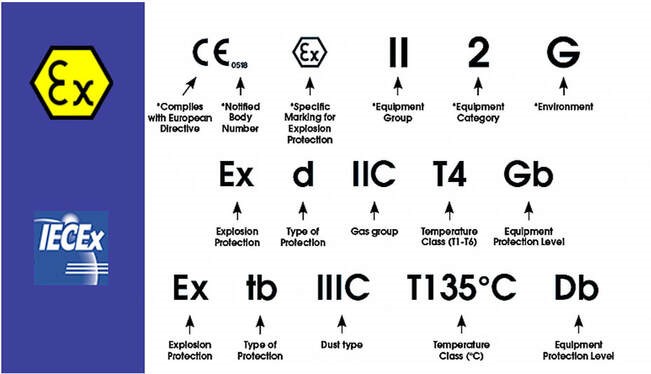
Why ATEX Certification Payoffs
- Safety of Workers: ATEX-equipped gear reduces the risk of ignition in flammable environments significantly, which is important to reduce losses in human lives and property.
- Following the Regulations: Certified equipment is not only penalty-free but also simplifies the audit process and allows the secure operation of the business in Europe and other countries.
- Operational Success: ATEX devices are constructed to be rugged to endure the harshest conditions, whether that is -150 °C (freezing), explosive gases, or shock, ensuring reduced downtime.
- Long-term financial benefits in the form of fewer accidents, reduced equipment failure, reduced insurance expenses and confidence in regulations are some of the cost savings.
ATEX Lighting, Power, and Monitoring Solutions
ATEX Lighting Solutions
Explosion-proof oil rig, refinery and confined area LED lamps. Lighting plays a very important role in safety and operations in dark and high risk areas.
ATEX Power Distribution Systems
Special attention should be paid to certified junction boxes, switchboards, and connectors which should provide electrical safety in explosive atmospheres without damage to reliable flow of power.
ATEX Monitoring and Control Systems
Spotlight industrial control panels, SCADA systems, and IoT-enabled ATEX devices that enable remote monitoring, automation, and predictive maintenance in oil and gas systems.
Conclusion
In the high risk sectors such as oil and gas operations, you cannot afford not to have ATEX certification. You can be working in pipelines, refineries, remote platforms, or chemical processing plants, but the decision to use ATEX-certified heating, monitoring, communication, or control systems can make or break the difference between protection of lives, compliance with regulations, and uptime. These are not only tools, but the basis of safe, efficient and reliable energy operations in explosive atmospheres.
In the future, with industries going digital and adopting Industry 4.0, devices that comply with ATEX regulations will, too, be updated: IoT connectivity, predictive analytics, AI-based safety inspections. This does not only imply that tomorrow the oil and gas facilities will not only be less prone to attack; they will also be smarter, highly efficient, and better suited to tackle the requirements of an ever more convoluted energy environment. Innovation and compliance converge into ATEX products that can play a critical role in enabling sustainable development in hazardous industries across the globe.
Frequently Asked Questions (FAQs)
1. ATEX Oil and Gas kya hai?
ATEX Oil and Gas European safety regulations hain jo hazardous aur explosive environments mein equipment ke safe use ko ensure karti hain.
2. ATEX certification kyun zaroori hai?
Ye certification explosion risks ko kam karti hai aur legal compliance ko ensure karti hai.
3. ATEX zones kya hotay hain?
ATEX zones hazardous areas ko classify karti hain jahan gases ya dust explosion ka risk hota hai.
4. Oil and gas industry mein ATEX ka role kya hai?
Ye drilling, refining, aur processing areas mein safety standards define karti hai.
5. ATEX Zone 0, 1 aur 2 mein kya farq hai?
Ye zones explosion ke risk ke level par based hotay hain.
6. ATEX compliant equipment kya hota hai?
Aisa equipment jo explosive atmospheres mein safely operate kar sake.
7. ATEX aur ATEX mein kya difference hai?
ATEX Europe-specific hai jab ke ATEX international standard hai.
8. ATEX Oil and Gas mein common risks kya hain?
Gas leaks, sparks, overheating, aur static electricity major risks hain.
9. ATEX regulations kin devices par apply hoti hain?
Sensors, control panels, tablets, lighting aur monitoring systems par.
10. ATEX documentation kyun important hai?
Inspection, audits, aur legal compliance ke liye zaroori hoti hai.
11. ATEX training field workers ke liye kyun zaroori hai?
Training human error ko kam karti hai aur safety awareness barhati hai.
12. Non-ATEX equipment use karne ka risk kya hai?
Explosion, injuries, aur heavy financial losses ka risk hota hai.
13. ATEX Oil and Gas mein maintenance ka role kya hai?
Regular maintenance equipment failure aur ignition risks ko kam karti hai.
14. ATEX compliance ka business benefit kya hai?
Downtime kam hota hai, safety barhti hai, aur insurance risks kam hotay hain.
15. 2025 mein ATEX Oil and Gas trends kya hain?
Smart monitoring, digital inspections, aur ATEX-certified smart devices ka use barh raha hai.
Related ATEX Products & Resources
Explore our range of ATEX-certified devices for hazardous areas: