


Wireless Monitoring Systems: 5 Smart Ways to Boost Efficiency & Cut Downtime
Wireless Monitoring Systems help industries boost efficiency, detect issues early, and cut costly downtime with real-time monitoring in 2025.
Introduction
Modern industries are rapidly adopting wireless monitoring systems to track, control, and optimize operations in real time.
These systems eliminate the limitations of wired networks, providing flexibility, cost savings, and continuous monitoring — even in harsh or remote environments.
From factories to refineries, wireless monitoring technology has become the backbone of Industry 4.0, enabling predictive maintenance, safety assurance, and energy optimization.
What Is a Wireless Monitoring System?
A Wireless Monitoring System is a network of sensors and transmitters that collects and transmits data wirelessly to a central hub, computer, or cloud platform.
It allows operators to monitor temperature, vibration, humidity, gas levels, pressure, and other parameters without physical cabling.
These systems use wireless communication protocols such as Wi-Fi, LoRaWAN, Zigbee, or Bluetooth Low Energy (BLE) to ensure reliable, low-power data transmission over long distances.
How Wireless Monitoring Systems Work
Wireless monitoring systems rely on three main components:
-
Sensors: Collect real-time data (e.g., temperature, vibration, or fluid levels).
-
Transmitter or Gateway: Sends data wirelessly to a base station or cloud platform.
-
Software Interface: Displays, analyzes, and stores data for further insights.
The process flow:
-
Sensors detect changes in the environment.
-
Data is converted into digital signals and sent wirelessly.
-
The system’s interface visualizes the information, triggering alerts if thresholds are exceeded.
This real-time feedback enables industries to detect problems early, reduce downtime, and improve operational performance.
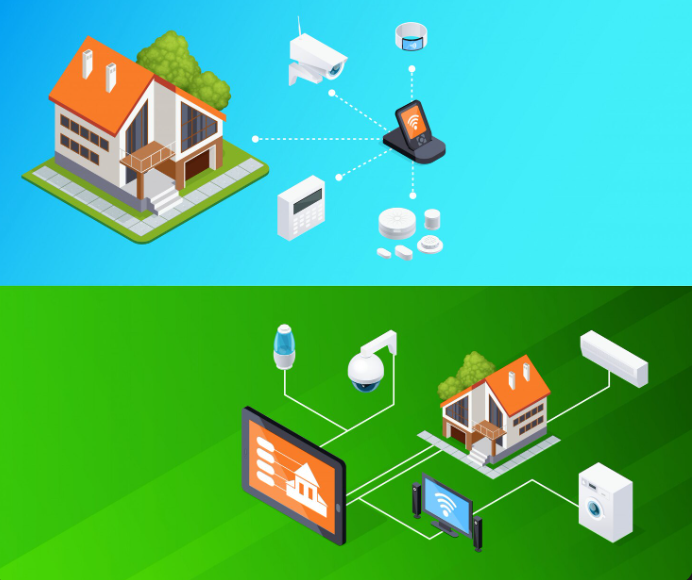
Key Features of Wireless Monitoring Systems
-
Real-Time Data Transmission – Continuous data flow from sensors to cloud.
-
Battery or Solar Power – Long-term, low-maintenance operation.
-
Scalability – Easily add or remove sensors as needed.
-
Remote Accessibility – Access data from any device via secure networks.
-
Automated Alerts – SMS or email notifications for critical thresholds.
-
High Accuracy – Industrial-grade sensors with minimal error margin.
-
Data Logging & Reporting – Historical trends and predictive analytics.
Types of Wireless Monitoring Systems
-
Environmental Monitoring Systems
-
Monitor humidity, air quality, and temperature in manufacturing or storage areas.
-
-
Structural Health Monitoring Systems
-
Used for bridges, tunnels, and buildings to detect stress or vibration anomalies.
-
-
Energy Monitoring Systems
-
Track power consumption and identify efficiency improvements.
-
-
Industrial Process Monitoring Systems
-
Monitor parameters like pressure, flow rate, and gas leaks in chemical and oil & gas plants.
-
-
Agricultural Monitoring Systems
-
Enable smart irrigation, soil moisture tracking, and crop condition analysis.
-
-
Healthcare & Pharmaceutical Systems
-
Used in hospitals and labs for cold chain and environmental control.
-
Applications of Wireless Monitoring Systems
-
Oil and Gas Facilities: Monitor pipelines, gas leaks, and equipment status.
-
Manufacturing Plants: Track machine vibration and temperature to prevent failures.
-
Power and Utilities: Remote substation and transformer monitoring.
-
Agriculture: Smart farming with automated irrigation control.
-
Warehouses: Temperature and humidity tracking for sensitive goods.
-
Construction Sites: Structural load and vibration monitoring.
-
Smart Cities: Traffic, lighting, and environmental monitoring.
Benefits of Wireless Monitoring Systems
-
No Wiring Hassle – Reduces installation costs and complexity.
-
Real-Time Insights – Live data improves operational awareness.
-
Increased Safety – Detect hazardous conditions early.
-
Scalability – Expand monitoring areas without major infrastructure.
-
Predictive Maintenance – Identify issues before equipment failure.
-
Energy Efficiency – Track consumption and minimize waste.
-
Cost Savings – Reduce manpower and manual inspections.
-
Remote Control – Access data from anywhere in the world.
Wireless Monitoring Systems in Hazardous Areas
In ATEX certified hazardous zones, wireless monitoring systems are built with intrinsic safety and explosion-proof housing to prevent ignition risks.
Examples include:
-
Wireless Gas Detection Systems – For monitoring methane or hydrogen leaks.
-
Temperature and Pressure Sensors – For tanks, refineries, and offshore rigs.
-
Wireless Vibration Monitoring – For rotating machinery and compressors.
These systems ensure safe operations, even in explosive atmospheres, while maintaining seamless data flow for critical decisions.
Wireless Technologies Used in Monitoring Systems
| Technology | Range | Power Usage | Best For |
|---|---|---|---|
| Wi-Fi | Medium | High | Indoor monitoring |
| LoRaWAN | Long | Low | Remote industrial zones |
| Zigbee | Medium | Low | Sensor networks |
| Bluetooth LE | Short | Very low | Portable devices |
| Cellular (4G/5G) | Very long | Medium | Wide-area monitoring |
Selecting the right communication protocol depends on distance, environment, and data frequency.
Integration with IoT and Cloud Platforms
Modern wireless monitoring systems are part of the Industrial Internet of Things (IIoT) ecosystem.
They integrate seamlessly with cloud-based analytics platforms for:
-
Predictive Maintenance
-
Machine Learning Insights
-
Automated Control Systems
-
Data Visualization Dashboards
Cloud connectivity allows businesses to analyze large-scale data, detect trends, and make data-driven operational decisions.
Challenges and Solution
| Challenge | Solution |
|---|---|
| Signal Interference | Use mesh networks or frequency hopping. |
| Battery Life | Low-power sensors or solar recharging. |
| Data Security | Encryption and authentication protocols. |
| Harsh Environments | Ruggedized, IP67-rated devices. |
| Network Congestion | LoRaWAN or segmented gateway setup. |
By addressing these challenges, industries ensure reliable, secure, and long-term monitoring performance.
How to Choose the Right Wireless Monitoring System
When selecting a system, consider:
-
Type of Parameters: Temperature, pressure, vibration, etc.
-
Communication Range: Distance between sensors and hub.
-
Power Requirements: Battery or solar.
-
Environment Type: Hazardous or non-hazardous.
-
Data Accuracy: Calibration and certification.
-
Integration Options: Compatibility with SCADA, PLC, or IoT systems.
Future Trends in Wireless Monitoring Systems
The next generation of wireless monitoring systems is integrating:
-
Artificial Intelligence (AI) for predictive analytics.
-
5G Connectivity for faster, more reliable data transfer.
-
Edge Computing for local data processing.
-
Blockchain for secure industrial data sharing.
-
Sustainable Power Sources like solar and kinetic energy.
These advancements are pushing industries toward fully autonomous, intelligent, and connected operations.
Conclusion
Wireless Monitoring Systems have transformed industrial operations, enabling real-time visibility, predictive analytics, and improved safety.
They are a vital part of digital transformation and Industry 4.0, offering flexible deployment and seamless integration with IoT platforms.
From smart factories to offshore rigs, wireless monitoring ensures efficiency, reliability, and safety — without the limitations of cables.
FAQs about Wireless Monitoring Systems
1. What is a wireless monitoring system?
It’s a sensor-based system that collects and transmits data wirelessly for monitoring and control.
2. Which industries use wireless monitoring systems?
Oil & gas, manufacturing, agriculture, energy, and healthcare.
3. How do wireless monitoring systems work?
They use sensors and gateways to transmit data via Wi-Fi, LoRaWAN, or Bluetooth.
4. Are they safe for hazardous areas?
Yes, ATEX-certified models are available for explosive zones.
5. What are the main benefits?
Lower cost, flexibility, real-time data, and improved safety.
6. What is the range of these systems?
It depends on the technology — from a few meters (BLE) to several kilometers (LoRaWAN).
7. Can wireless monitoring systems use solar power?
Yes, many models support solar-powered sensors.
8. Is internet connectivity required?
Not always — local gateways can store and process data offline.
9. How long do sensor batteries last?
Usually 2–10 years depending on the system’s duty cycle.
10. What communication devices protocols are common?
Wi-Fi, LoRa, Zigbee, Bluetooth, and cellular (4G/5G).
11. Are wireless systems secure?
Yes, they use encryption and authentication layers.
12. Can they be integrated with SCADA?
Yes, modern systems support Modbus, MQTT, or OPC protocols.
13. What is predictive maintenance?
It’s the use of sensor data to anticipate equipment failures.
14. What are environmental monitoring systems?
They track parameters like temperature, air quality, and humidity.
15. What’s the future of wireless monitoring?
AI-driven, cloud-integrated, and self-powered smart monitoring solutions.
Industrial Applications & Real-World Use Cases
In hazardous industrial environments such as oil refineries, petrochemical plants, offshore platforms, and mining operations, reliable communication is a critical safety requirement. Workers in Zone 1 and Zone 21 classified areas face constant exposure to flammable gases, vapors, and combustible dust. Any electronic device used must be intrinsically safe to prevent ignition.
Oil & Gas Operations
Field engineers on drilling rigs, well pads, and production platforms rely on ATEX certified devices for work order management, real-time communication with control rooms, digital permit-to-work systems, and photographic documentation. Our devices are deployed across ADNOC, Saudi Aramco, KOC, KNPC, ONGC, Petrobras, and Shell facilities worldwide.
Refinery & Petrochemical Safety
Process safety management requires continuous communication between operators, maintenance technicians, and HSE personnel. ATEX phones enable instant push-to-talk during turnarounds, emergency responses, and inspection rounds. Explosion-proof tablets allow viewing P&IDs and digital checklists in the field.
Offshore Platform Operations
Offshore environments present salt spray corrosion, extreme weather, and limited charging infrastructure. Our IP68-rated devices withstand these conditions while maintaining Zone 1 certification for crane coordination, emergency mustering, and helicopter manifesting.
Safety Compliance Standards
- ATEX Directive 2014/34/EU — European explosive atmospheres standard
- Ex ia IIC T4 Gb — Zone 1 intrinsic safety for gas groups
- Ex ia IIIC T135°C Db — Zone 21 dust protection
- IP68 — Dust and water protection
- MIL-STD-810H — Military-grade durability
Browse Products → | Request Quote → | Certifications →
Related ATEX Products & Resources
Explore our range of ATEX-certified devices for hazardous areas: