


Top 10 ATEX Communication Devices for Hazardous Zones
Introduction:
In explosive or flammable industrial environments, standard mobile devices pose serious risks. A spark, a hot surface, or static electricity from an unprotected device can lead to catastrophic consequences.
That’s where ATEX communication devices come into play. These devices are specifically engineered and certified to be safe in explosive atmospheres under the ATEX directive. They enable safe, efficient, and compliant communication across high-risk sectors such as oil & gas, chemical plants, pharmaceuticals, and mining.
This article explores everything you need to know about the ATEX communication devices—from definitions to types, certifications, use cases, and market growth.
2. What Are ATEX Communication Devices?
ATEX communication devices are mobile or wireless communication tools designed for use in environments with potential explosive atmospheres. These can include:
-
Smartphones
-
Tablets
-
Two-way radios
-
Smart headsets and wearables
-
Push-to-talk (PTT) devices
These devices are built with enclosures, materials, and internal designs that prevent ignition of surrounding explosive gases, vapors, or dust. They carry ATEX certification, which ensures compliance with EU Directive 2014/34/EU.
3. Understanding the ATEX Directive
The term ATEX comes from the French “Appareils destinés à être utilisés en Atmosphères Explosibles”, meaning equipment for explosive atmospheres.
There are two key directives:
-
ATEX 114 (Directive 2014/34/EU): For manufacturers of explosion-proof equipment.
-
ATEX 153 (Directive 1999/92/EC): For employers ensuring safe use of such devices.
ATEX Zones:
| Zone | Description | Example |
|---|---|---|
| Zone 0 | Constant explosive atmosphere | Fuel tank interiors |
| Zone 1 | Likely during normal operation | Oil rig floors |
| Zone 2 | Unlikely and short-term | Refinery control rooms |
ATEX communication devices must be certified according to the appropriate zone and gas group.
4. Why ATEX Devices Are Critical in Industry
In high-risk zones, reliable and safe communication is non-negotiable. ATEX communication devices offer:
-
Explosion protection: Prevent device-triggered ignition
-
Real-time coordination: Vital in emergencies
-
Data collection & analysis: Connect to sensors and control systems
-
Process continuity: No shutdowns due to unsafe devices
The use of ATEX communication devices is legally required in many facilities handling flammable substances in Europe and other ATEX-recognizing regions.
5. Market Overview and Growth
The global market for ATEX communication devices is growing rapidly. As of 2023:
-
Market value: Estimated USD 380 million
-
Projected CAGR: 8.1% through 2030
-
Europe dominates due to strict enforcement of ATEX regulations
-
Growth fueled by digital transformation in hazardous industries
The increasing integration of IoT, real-time data transfer, and remote inspection is driving demand for rugged, safe, and connected devices.
6. Key Types of ATEX Communication Devices
6.1. ATEX Smartphones
Rugged smartphones running Android or special OS versions with:
-
4G/5G support
-
Touchscreen operable with gloves
-
IP68-rated waterproofing
-
ATEX Zone 1/Zone 2 certified
Used for video conferencing, workflow apps, barcode scanning, and GPS tracking.
6.2. ATEX Tablets
Larger displays for:
-
Documentation & inspection forms
-
SCADA & ERP access
-
Industrial diagnostics apps
Widely used in offshore oil rigs and chemical process areas.
6.3. Two-Way Radios (Ex Radios)
Simple, highly reliable push-to-talk communication. ATEX radios often include:
-
Emergency call buttons
-
Long battery life
-
Noise cancellation
-
Lone worker monitoring
6.4. Smart Headsets & Wearables
Hands-free, voice-activated tools that support:
-
Voice commands
-
Bluetooth pairing
-
Safety alarms and alerts
Often used in maintenance, inspections, and logistics.
7. Use Cases Across Industries
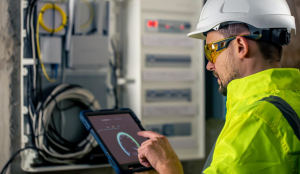
ATEX communication devices are used in:
Oil & Gas
Used on drilling platforms, refineries, and pipelines to support remote teams and ensure safety compliance.

Mining
Enable deep underground communication where ventilation and flammable gases are a threat.
Chemical & Pharmaceutical
Used in labs and production areas with volatile solvents and materials.

Agriculture & Food Processing
Used in grain silos and flour mills where combustible dust is common.
Utilities & Energy
Support for field technicians in substations and gas handling units.
8. Compliance and Certification Standards
Alongside ATEX, some global certifications may apply:
-
ATEX – International standard widely accepted outside Europe
-
UL913 – U.S. certification for intrinsically safe devices
-
CSA – Canadian safety approvals
ATEX communication devices typically list:
-
Certification type (e.g., II 2G Ex ib IIC T4 Gb)
-
Zone compatibility
-
Gas/dust group compatibility
-
Surface temperature class
Proper labeling and documentation are essential for legal use.
9. Key Players in the ATEX Device Market
| Manufacturer | Country | Notable Devices |
|---|---|---|
| Ecom Instruments | Germany | Smart-Ex® 02, Tab-Ex® 03 |
| i.Safe MOBILE | Germany | IS530.1, IS930.1 |
| Bartec Pixavi | Norway | Impact X, Gravity X |
| Sonim Technologies | USA | XP8 ATEX phone |
| Getac | Taiwan | Fully rugged ATEX tablets |
These manufacturers focus on innovation, rugged design, and long-term certification support.
10. Challenges in the ATEX Device Market
While demand is increasing, the ATEX communication devices market faces several challenges:
Cost and Accessibility
Prices are 2x–3x higher than standard devices, limiting adoption in budget-constrained industries.
Software Restrictions
Devices often support only enterprise-safe apps. Integration with custom workflows can be difficult.
Battery and Performance Limitations
ATEX-compliant batteries may have limited performance to prevent heat build-up.
11. Innovation Trends in ATEX Devices
Integration with IoT & Sensors
Real-time communication with gas detectors, alarms, and telemetry units.
5G and Wi-Fi 6 Capabilities
Enable faster data transfer in high-bandwidth environments like video inspection or AR support.
AI-Based Predictive Maintenance
Devices collect and transmit data for machine learning-based failure prediction.
AR/VR Compatibility
Remote support and training in complex field environments.
12. Buying Considerations for ATEX Communication Devices
Before purchasing, assess:
-
Certification level (Zone 0, 1, or 2)
-
Device type (smartphone, tablet, radio)
-
Battery runtime and recharge options
-
OS support (Android, Linux, Windows)
-
Ruggedness (IP rating, MIL-STD)
-
App compatibility & device management
Also ensure the vendor provides:
-
Warranty & support
-
Software updates
-
Documentation for audits
-
Local certification assistance
13. Regional Market Trends
Europe
-
Most developed ATEX device market
-
Strong presence of German manufacturers
-
Large demand in Norway, UK, and Netherlands
North America
-
Increasing ATEX adoption in addition to UL
-
Growth in shale and offshore energy sectors
Asia-Pacific
-
Rapid industrialization in India, China
-
Growth in chemicals, energy, and mining
-
Rising focus on safety compliance
Looking ahead, the ATEX communication devices market is expected to benefit from:
-
Unified global safety standards (ATEX + ATEX harmonization)
-
Expanded use of edge computing in hazardous environments
-
Satellite-connected Ex devices for remote zones
-
Integration with smart PPE (helmets, glasses, belts)
As industry 4.0 evolves, these devices will become central to safe and efficient operations in explosive zones.
Conclusion
ATEX communication devices are more than a regulatory checkbox—they’re a lifeline for workers operating in the world’s most dangerous industrial zones. From refineries and underground mines to pharmaceutical labs and chemical plants, these devices provide the safety, compliance, and real-time connectivity industries need.
The ATEX communication devices market will continue to grow with rising awareness, safety regulation, and technological evolution. Investing in these tools today means securing your workforce and operations for a safer tomorrow.
Industrial Applications & Real-World Use Cases
In hazardous industrial environments such as oil refineries, petrochemical plants, offshore platforms, and mining operations, reliable communication is a critical safety requirement. Workers in Zone 1 and Zone 21 classified areas face constant exposure to flammable gases, vapors, and combustible dust. Any electronic device used must be intrinsically safe to prevent ignition.
Oil & Gas Operations
Field engineers on drilling rigs, well pads, and production platforms rely on ATEX certified devices for work order management, real-time communication with control rooms, digital permit-to-work systems, and photographic documentation. Our devices are deployed across ADNOC, Saudi Aramco, KOC, KNPC, ONGC, Petrobras, and Shell facilities worldwide.
Refinery & Petrochemical Safety
Process safety management requires continuous communication between operators, maintenance technicians, and HSE personnel. ATEX phones enable instant push-to-talk during turnarounds, emergency responses, and inspection rounds. Explosion-proof tablets allow viewing P&IDs and digital checklists in the field.
Offshore Platform Operations
Offshore environments present salt spray corrosion, extreme weather, and limited charging infrastructure. Our IP68-rated devices withstand these conditions while maintaining Zone 1 certification for crane coordination, emergency mustering, and helicopter manifesting.
Safety Compliance Standards
- ATEX Directive 2014/34/EU — European explosive atmospheres standard
- Ex ia IIC T4 Gb — Zone 1 intrinsic safety for gas groups
- Ex ia IIIC T135°C Db — Zone 21 dust protection
- IP68 — Dust and water protection
- MIL-STD-810H — Military-grade durability
Browse Products → | Request Quote → | Certifications →
Related ATEX Products & Resources
Explore our range of ATEX-certified devices for hazardous areas:
ATEX Communication Devices by Country
Country pages list the certified radios, phones and tablets we stock locally, with the approvals each operator requires:
- ATEX supplier in Qatar – explosion-proof mobiles for Doha, Ras Laffan and Mesaieed
- ATEX mobile phones in the UK – UKEX certified for North Sea operations
- ATEX devices in Oman – PDO and OQ refinery communications